Understanding Air Handler
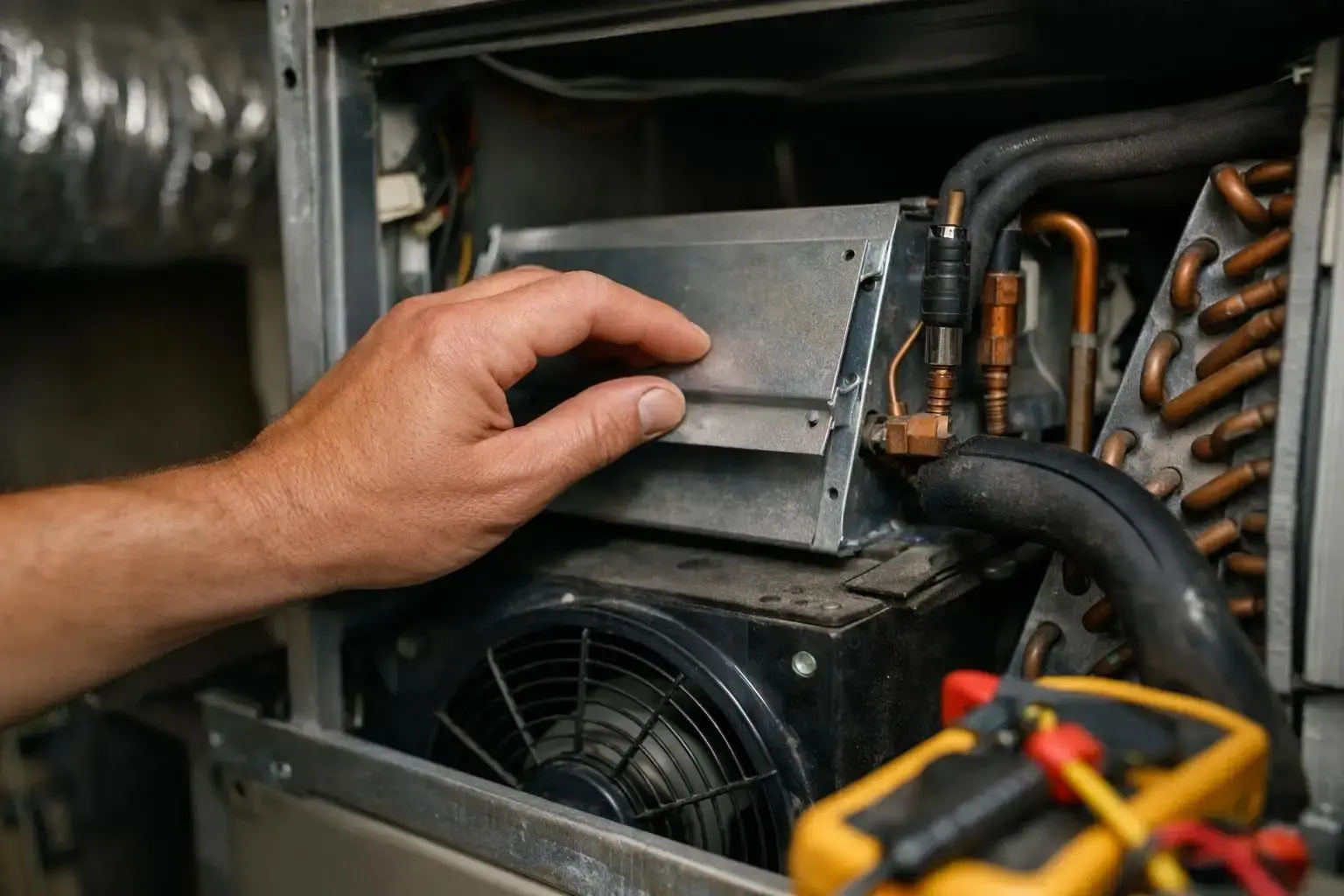
An air handler is the indoor section of a central HVAC system responsible for moving air through a building’s ductwork. Unlike outdoor units that release or absorb heat, the air handler focuses on distributing conditioned air indoors. It typically includes a blower fan, evaporator coil, air filter. And sometimes a heating element like a heat strip. The blower pulls air from return ducts, passes it over the coil to adjust temperature, then pushes it back into supply ducts. This process repeats continuously to maintain a comfortable indoor environment.
Related glossary terms: Ductwork, Evaporator Coil, CFM.
Air handlers come in different sizes and configurations to match the needs of homes, offices. Or larger buildings. Residential air handlers are usually compact and installed in closets, attics. Or basements. While commercial units may be larger and mounted on rooftops or in mechanical rooms. The size of an air handler is measured in tons, which refers to its cooling capacity, not its physical weight. A properly sized air handler ensures efficient airflow without overworking the system or wasting energy.
How Air Handler Works?
The air handler operates as part of a split HVAC system, working alongside an outdoor unit like an air conditioner or heat pump. When cooling is needed, the outdoor unit removes heat from refrigerant, which then flows to the evaporator coil inside the air handler. The blower pulls warm indoor air over the cold coil, lowering its temperature before sending it back into the home. In heating mode, the process reverses if a heat pump is used. Or a heat strip inside the air handler warms the air directly.
The blower motor is a critical part of the air handler, as it determines how much air moves through the system. Older units use single-speed motors that run at full capacity whenever active. While newer models often feature variable-speed motors that adjust airflow based on demand. This variability improves energy efficiency and comfort by maintaining more consistent temperatures and reducing drafts. Air filters inside the air handler also play a key role by trapping dust, pollen. And other particles, which helps improve indoor air quality and protects the system from debris buildup.
Why Air Handler Matters?

The air handler directly impacts indoor comfort, energy efficiency. And air quality. A well-maintained unit ensures even airflow, preventing hot or cold spots in different rooms. It also affects energy bills, as inefficient blowers or dirty filters force the system to work harder, increasing electricity use. Poor airflow can strain the HVAC system, leading to more frequent repairs or a shorter lifespan for the equipment. And the air handler’s filter traps airborne contaminants, which is especially important for people with allergies or respiratory conditions.
Another key factor is humidity control. In humid climates like Lewisville, TX, air handlers help remove excess moisture from the air during cooling cycles. If the system is oversized or the blower runs too slowly, the air may not stay on the coil long enough to dehumidify properly, making indoor spaces feel clammy. Proper sizing and maintenance of the air handler ensure it handles both temperature and humidity effectively, improving overall comfort.
When Air Handler Matters Most?
Air handlers become especially important during extreme weather, when HVAC systems run more frequently. In Lewisville, TX, where summer temperatures often exceed 95°F, a faulty air handler can lead to poor cooling performance, higher energy costs. Or even system breakdowns. Homeowners may notice issues like weak airflow, unusual noises. Or inconsistent temperatures, which often signal problems with the blower motor, coil. Or filter. Regular maintenance, such as replacing filters and cleaning coils, helps prevent these issues and keeps the system running smoothly.
Air handlers also matter when upgrading or replacing an HVAC system. Choosing the right size and type of air handler ensures compatibility with the outdoor unit and the home’s ductwork. For example, a variable-speed air handler paired with a two-stage heat pump can improve efficiency and comfort compared to a single-speed model. Homeowners should also consider the unit’s MERV rating if indoor air quality is a priority, as higher-rated filters capture smaller particles but may require more frequent replacement to avoid restricting airflow.