Glossary

What is CFM?

CFM is the standard unit used to measure how much air moves through a space each minute. CFM stands for cubic feet per minute, showing the volume of air a fan, vent. Or HVAC system can push or pull. Higher CFM means more airflow, which affects heating, cooling. And indoor air quality in homes and buildings.

Sources reviewed: U.S. Department of Energy - HVAC Airflow Basics, ACCA Manual D - Residential Duct Systems

Quick Facts About CFM

Category

Airflow measurement

Used for

HVAC system sizing and performance

Common confusion

Often mixed up with air speed (feet per minute)

Also called

Cubic Feet per Minute

Often discussed with

AC Maintenance, HVAC Replacement

Key Takeaways About CFM

Understanding CFM

CFM in HVAC Contractor: CFM is the standard unit used to measure how much air moves—visual guide

CFM means cubic feet per minute. It measures air in heating and cooling systems. It shows how much air moves each minute.

Related glossary terms: Ductwork, HVAC Load Calculation, Indoor Air Quality.

Think of CFM like water in a pipe. More water means a stronger flow. More air means stronger airflow.

CFM helps your furnace or AC work right. It keeps your room comfy and healthy.

Airflow is important. Too little CFM makes rooms stuffy. Too much wastes energy.

A small bedroom needs less CFM. A big living room needs more. Pros match CFM to room size.

How CFM Is Measured and Calculated?

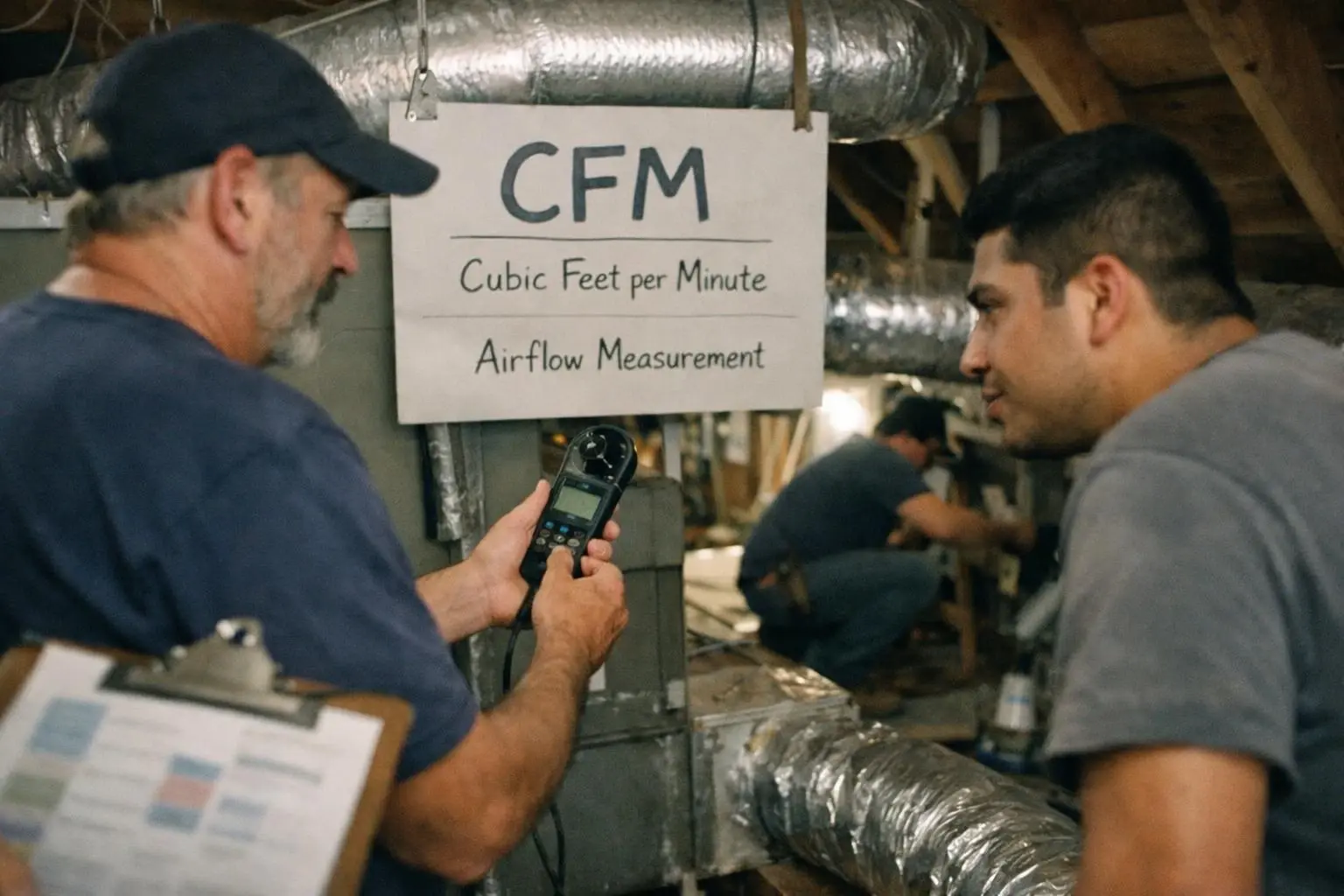
Tools like anemometers (air speed meters) measure CFM. They check air speed at vents. They also check air volume.

To find CFM, multiply air speed by vent size. Air speed is feet per minute. Vent size is square feet.

For example, 500 feet per minute in a 1-foot vent equals 500 CFM. Most HVAC systems list their CFM. But pros test real airflow to be sure.

Duct size and shape change CFM. So do bends or filters. Narrow ducts or clogs lower CFM.

Even a strong fan won't help if ducts are small or dirty. That's why techs check ducts and filters.

Why CFM Matters?

How CFM applies to HVAC Contractor services in Lewisville, United States—practical illustration

Right CFM keeps your system working well. Too little CFM makes rooms too hot or cold. The system runs longer and wastes energy.

Too much CFM causes drafts. It makes temperatures uneven. It also raises bills.

Good CFM helps filters and coils. This improves air quality. It also makes equipment last longer.

A furnace with wrong CFM turns on and off too much. This wears out parts faster.

An AC with low CFM can't cool well. High CFM can freeze coils. Balanced CFM saves money.

When CFM Matters Most?

CFM matters when you install or fix HVAC systems. Techs match CFM to your home's needs.

Adding rooms or changing filters affects CFM. You may need to adjust airflow.

In Lewisville, TX, weather changes a lot. Proper CFM helps systems handle heat and cold.

Homes with bad airflow feel drafty or stuffy. Good CFM keeps you comfy all year.

Check CFM during regular HVAC maintenance. This keeps systems efficient in local weather.
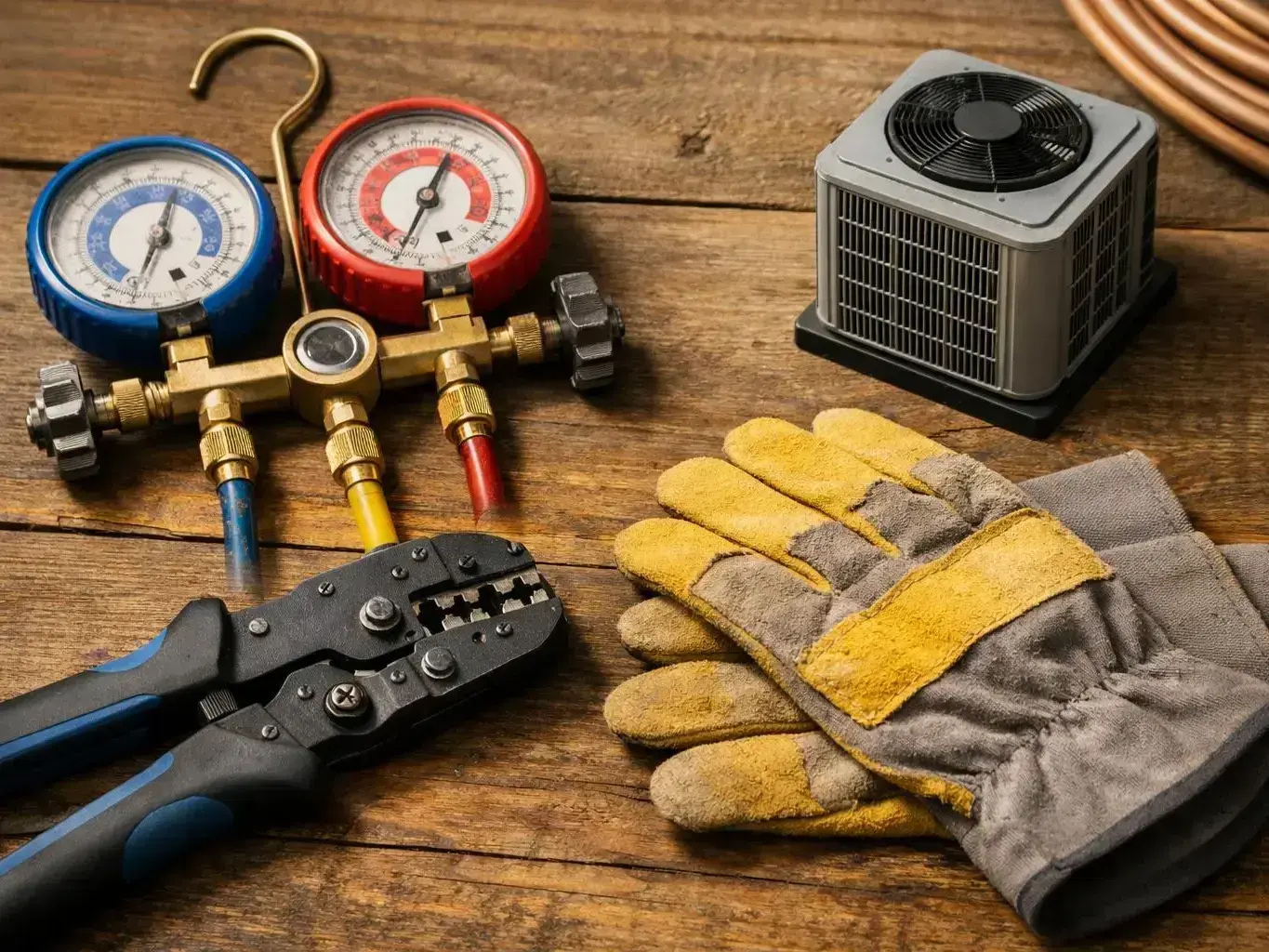
How to Evaluate CFM?

Related Concepts Compared

CFM vs. Feet per minute (FPM)

FPM measures air speed. While CFM measures volume. FPM tells how fast air moves. But CFM shows how much air moves per minute.

CFM vs. Static pressure

Static pressure measures resistance to airflow in ducts. While CFM measures the actual airflow volume. High static pressure can reduce CFM.

Expert Note

CFM isn’t just about comfort—it directly impacts HVAC efficiency and equipment lifespan. Even a 10% drop in CFM can reduce cooling capacity by up to 20%. So regular airflow checks are worth the effort.

Common Mistakes or Myths About CFM

  • Assuming bigger ducts always mean better CFM—oversized ducts can reduce air speed and efficiency.
  • Ignoring filter cleanliness, which can drop CFM by 20% or more.
  • Mixing up CFM with fan speed—higher fan speed doesn’t always mean higher CFM if ducts are blocked.
  • Forgetting to recalculate CFM after adding or removing vents or rooms.

CFM in Practice: A Real-World Example

A family in Lewisville notices their living room stays warm while the rest of the house cools fine. An HVAC technician measures CFM and finds the vent delivers only 200 CFM instead of the needed 400 CFM. Adjusting duct size or fan speed restores proper airflow, fixing the problem.

Sources & Further Reading on CFM

  • U.S. Department of Energy - HVAC Airflow Basics
  • ACCA Manual D - Residential Duct Systems
  • ASHRAE Fundamentals Handbook

Related Services

Related Terms

Ductwork

Ductwork is a network of tubes, typically made of sheet metal, fiberglass. Or flexible plastic, installed in homes and buildings to distribute heated or cooled air from HVAC systems. Ductwork carries air from furnaces, air conditioners. Or heat pumps to rooms and returns stale air back to the system for reconditioning, ensuring consistent indoor comfort and air quality.

HVAC Load Calculation

HVAC Load Calculation is a detailed process that determines how much heating or cooling a building needs to stay comfortable year-round. It considers factors like room size, insulation, windows, occupants. And local climate to size equipment correctly and avoid energy waste or poor performance.

Indoor Air Quality

Indoor Air Quality is the condition of the air inside buildings and structures, especially as it relates to the health and comfort of occupants. Indoor Air Quality measures pollutants such as dust, mold, pollen, carbon monoxide. And volatile organic compounds (VOCs), as well as temperature, humidity. And ventilation levels. Poor Indoor Air Quality can cause headaches, allergies, fatigue. And long-term respiratory issues.

MERV Rating

MERV Rating is a standardized scale from 1 to 20 that measures how effectively an air filter captures dust, pollen, mold spores. And other airborne particles. Higher MERV Ratings indicate finer filtration, meaning the filter traps smaller particles and improves indoor air quality in homes and businesses.

Variable Speed Motor

Variable Speed Motor is an advanced electric motor used in HVAC systems that adjusts its rotational speed continuously rather than running at fixed speeds like single-speed or two-stage motors. So you can the motor to match airflow or cooling/heating demand precisely, improving energy efficiency, comfort. And system longevity by reducing frequent starts and stops.

ACRepairLewisvilleTX.com

Have Questions About CFM?

Contact ACRepairLewisvilleTX.com for practical guidance on CFM and related hvac contractor work in Lewisville.

(469) 460-3491