Understanding MERV Rating

A MERV Rating tells you how well an air filter works. It goes from 1 to 20. A 1 rating is the worst. A 20 rating is the best.
Related glossary terms: Indoor Air Quality, Air Handler, Ductwork.
Filters with low MERV Ratings, like 1 to 4, catch big particles. These include dust and lint. They work in homes or offices with basic needs.
Filters with higher MERV Ratings, like 13 to 16, trap tiny particles. They catch bacteria, smoke. And some viruses. Hospitals and labs use these filters.
ASHRAE made the MERV Rating system. This group works with heating and cooling. They wanted a way to compare filters.
Before MERV, there was no standard way to test filters. People didn't know if a filter would help air quality. Now, MERV Ratings make it easy to choose.
How MERV Rating Works?
To find a MERV Rating, filters are tested. They see how many particles the filter catches. Particles can be as small as 0.3 microns.
A MERV 8 filter catches 70% of some particles. These are 3 to 10 microns in size. They include mold and dust mite bits.
A MERV 13 filter catches even more. It stops 90% of 3 to 10 micron particles. It also catches 75% of 1 to 3 micron particles. These include smoke and bacteria.
Tests send air with particles through the filter. They count how many get trapped. Then they give the filter a MERV Rating.
MERV Ratings don't measure gases or smells. They only show how well filters catch solid bits. For gases, you need special filters like activated carbon.
Higher MERV Ratings mean better filtering. But they also make filters thicker. Thick filters can block airflow in your HVAC system.
Blocked airflow makes your system work harder. This can raise energy bills. It can also damage your system.
Pick a MERV Rating that fits your system. It should also meet your air needs. This keeps your system safe and efficient.
Why MERV Rating Matters?
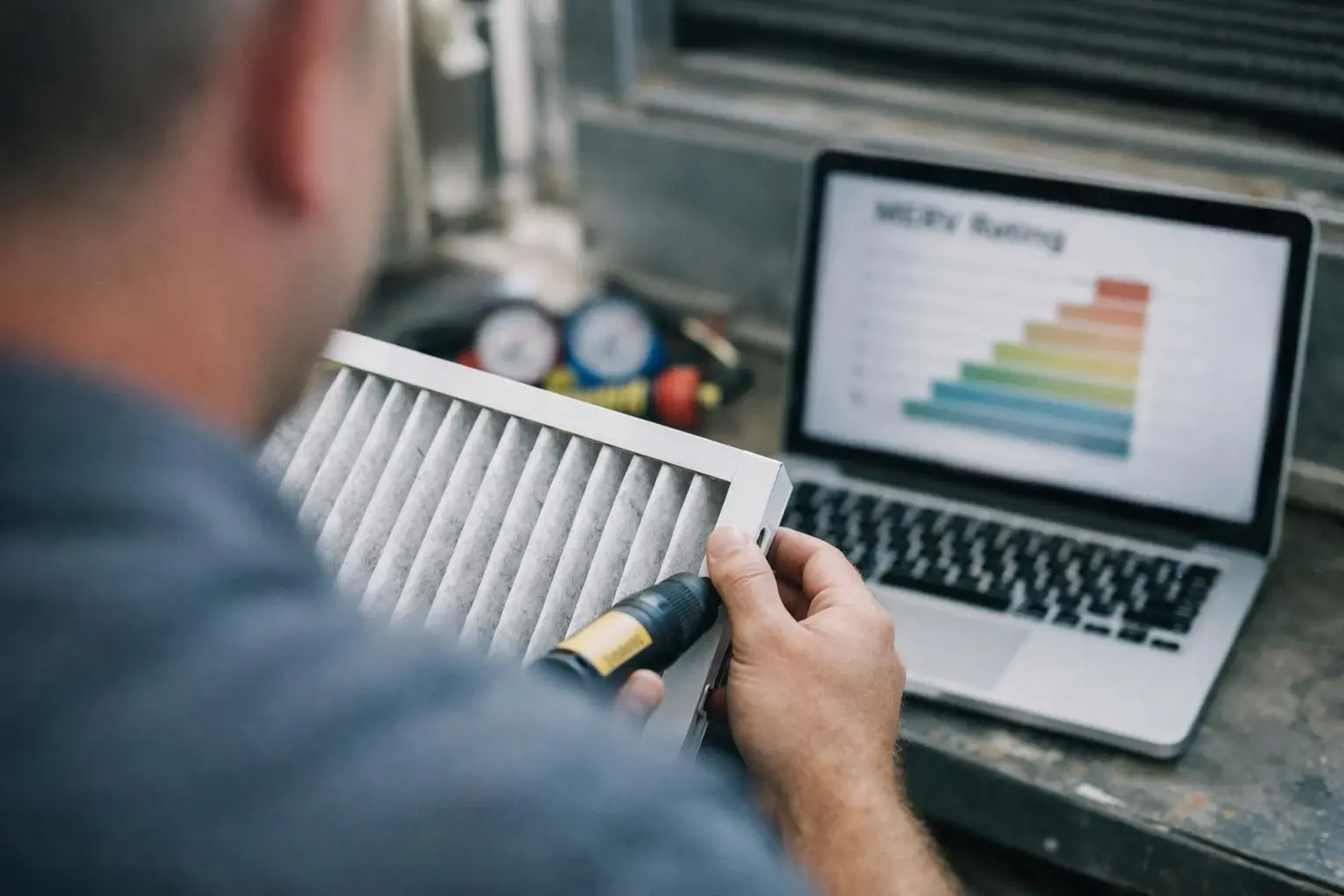
MERV Rating affects the air you breathe inside. Bad air can cause allergies or asthma. It can also cause other breathing problems.
The right MERV Rating helps remove bad particles. This makes your home or work healthier. A MERV 11 filter removes pet hair and pollen.
This helps people with allergies. A MERV 13 filter removes smoke and bacteria. This is good for sensitive people or during fires.
MERV Rating also affects your HVAC system. A filter that's too thick can hurt your system. It makes the blower work too hard.
This can cause higher bills or system breaks. A filter that's too thin won't protect your system. Dust can build up and hurt efficiency.
Pick the right MERV Rating. This keeps your system running well. It also keeps your air clean.
When MERV Rating Matters Most?
MERV Rating matters more in some cases. Homes with pets or smokers need higher ratings. So do homes with allergies or asthma.
Ratings between 11 and 13 work best. They catch pet hair, smoke. And pollen. This helps reduce symptoms.
Higher ratings also help during pollen season. They trap dust from home projects. This keeps air clean.
Hospitals and labs need very high ratings. They often use MERV 14 or higher. This keeps air very clean and safe.
Schools and offices use MERV 8 to 11. This helps stop sickness from spreading. It also makes air better for everyone.
Factories may use lower ratings. They need to protect machines. But they don't want to block airflow.
In Lewisville, TX, MERV Rating is very important. The area has high humidity and allergies. It also has city pollution.
Pick the right rating for your system. This helps with these problems. It keeps air clean and systems working well all year.