Understanding Zoning System

A zoning system is a way to customize the heating and cooling in different parts of a home or building. Instead of treating the entire space as one area, a zoning system divides it into separate zones, each with its own thermostat. So you can homeowners to set different temperatures for different rooms or areas, depending on their needs. For example, a living room with large windows might need more cooling than a basement bedroom. And a zoning system makes it possible to adjust each area independently.
Related glossary terms: Ductwork, Programmable Thermostat, HVAC Load Calculation.
Zoning systems work by using dampers installed inside the ductwork. These dampers open or close to control the flow of heated or cooled air to each zone. When a thermostat in a zone calls for heating or cooling, the damper for that zone opens, allowing conditioned air to flow in. Once the desired temperature is reached, the damper closes, redirecting airflow to other zones that need it. This targeted approach prevents wasted energy by avoiding heating or cooling areas that are not in use.
How Zoning System Works?
To understand how a zoning system works, it helps to think about the components involved. The main parts include multiple thermostats, a central control panel. And motorized dampers installed in the ductwork. Each thermostat is placed in a different zone and communicates with the control panel. When a thermostat detects that its zone needs heating or cooling, it sends a signal to the control panel, which then opens the corresponding damper to allow airflow into that zone.
The dampers are the key to directing airflow. They're typically installed at strategic points in the ductwork, such as where branches lead to different rooms or floors. When a damper opens, it allows conditioned air to flow into its zone. While closed dampers block airflow to other zones. This system ensures that only the zones that need heating or cooling receive it, which can lead to significant energy savings. For homes with multiple floors or large open spaces, zoning systems can also help balance temperatures more effectively than a single thermostat.
Why Zoning System Matters?
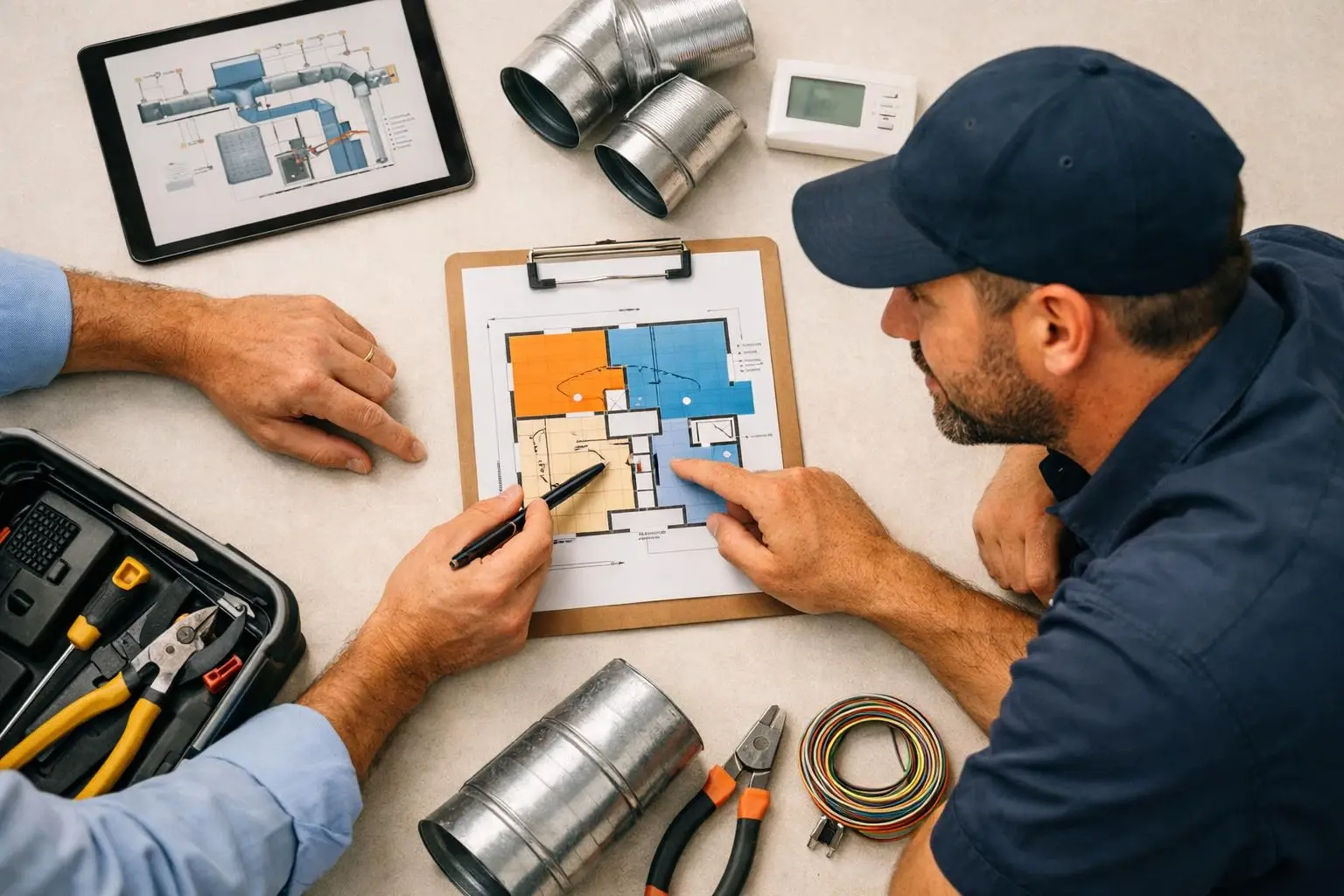
Zoning systems matter because they address two common problems in heating and cooling: uneven temperatures and wasted energy. In many homes, some rooms are consistently too hot or too cold. While others are just right. This can be frustrating for homeowners and often leads to adjusting the thermostat frequently, which wastes energy. A zoning system solves this problem by allowing different temperatures in different areas. So everyone in the home can be comfortable without compromising energy efficiency.
Another reason zoning systems matter is their potential for energy savings. By heating or cooling only the zones that are in use, a zoning system reduces the workload on the HVAC equipment. This can lead to lower energy bills and extend the lifespan of the system. For homeowners with large homes, multiple floors. Or rooms with different heating and cooling needs, a zoning system can be a smart investment that pays off in both comfort and savings over time.
When Zoning System Matters Most?
Zoning systems matter most in homes or buildings where temperature control is challenging. For example, homes with multiple floors often experience temperature differences between the upper and lower levels. Heat rises. So upper floors can become too warm while lower floors stay cool. That matters. A zoning system can balance these temperatures by allowing different settings for each floor. Similarly, homes with large windows, vaulted ceilings. Or rooms that are rarely used can benefit from a zoning system, as these features can create uneven heating and cooling.
In practice, Zoning systems are also valuable in homes where family members have different temperature preferences. For instance, one person might prefer a cooler bedroom while another likes a warmer living room. Instead of arguing over the thermostat, a zoning system allows each person to set their preferred temperature in their own space. And zoning systems can be useful in homes with additions or converted spaces, such as a garage turned into a home office, where the new area may have different heating and cooling needs than the rest of the house.