Understanding Programmable Thermostat
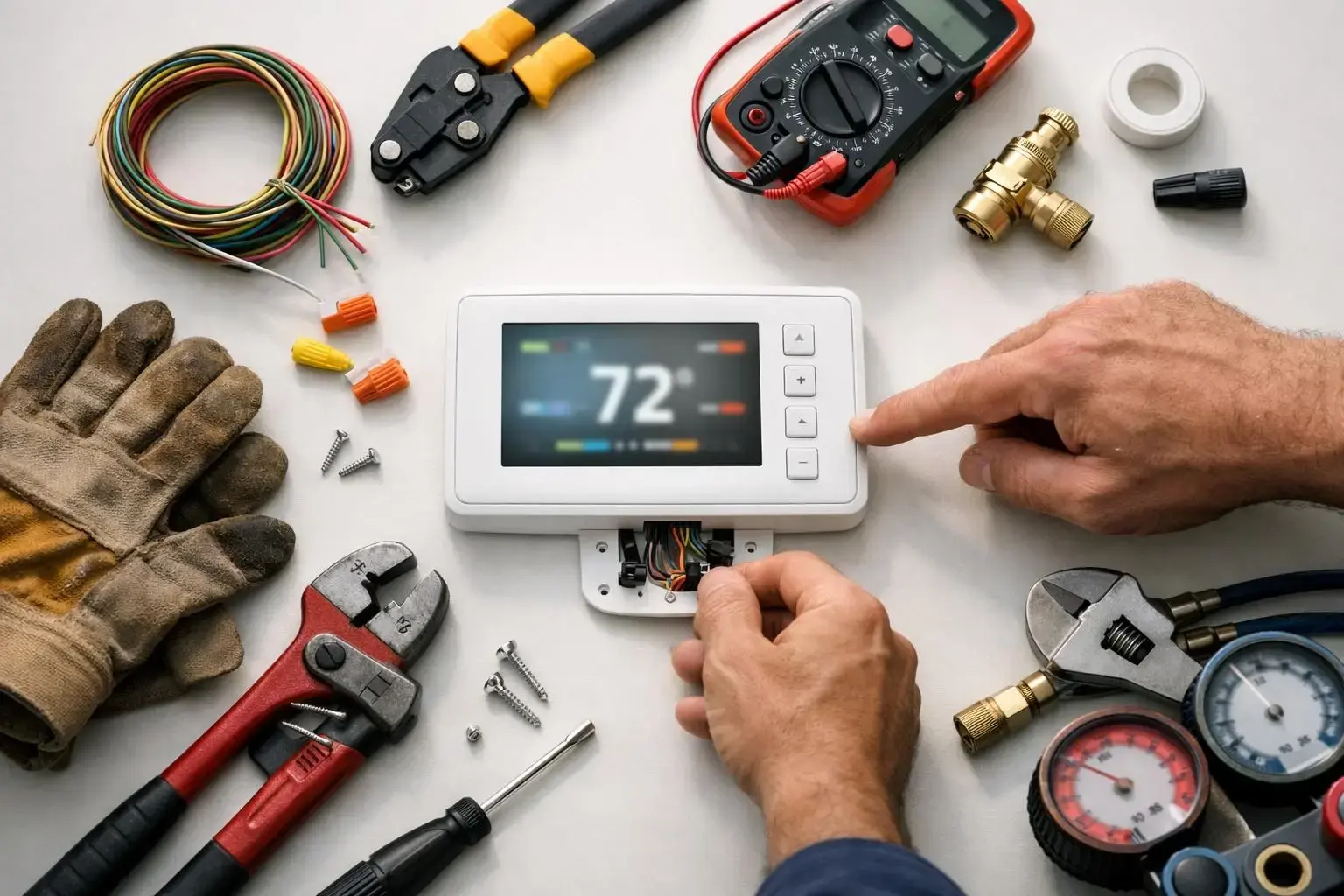
A programmable thermostat is a small, wall-mounted device that controls a home’s heating and cooling system. Unlike a basic manual thermostat, which requires users to adjust the temperature by hand, a programmable thermostat lets users create a schedule for temperature changes throughout the day. This schedule can include different settings for morning, afternoon, evening. And night, as well as separate settings for weekdays and weekends.
Related glossary terms: Thermostat, HVAC Load Calculation, ENERGY STAR.
These thermostats are designed to reduce energy use by automatically lowering or raising the temperature when a home is empty or when occupants are asleep. For example, a user might set the thermostat to cool the home to 78°F during the day when no one is home and then lower it to 72°F just before family members return. This prevents the HVAC system from running unnecessarily, which can lead to lower utility bills and less wear on the equipment.
How Programmable Thermostat Works?
A programmable thermostat works by using a built-in clock and a set of user-defined temperature settings. Users input their preferred schedule, such as waking up at 6 AM, leaving for work at 8 AM, returning at 5 PM. And going to bed at 10 PM. The thermostat then follows this schedule, sending signals to the HVAC system to turn on or off based on the programmed times and temperatures.
Most programmable thermostats offer multiple scheduling options, such as 5-2 day programming (one schedule for weekdays, another for weekends), 5-1-1 programming (weekdays, Saturday, Sunday). Or 7-day programming (a unique schedule for each day of the week). Some models also include features like temporary overrides, which allow users to change the temperature manually without disrupting the preset schedule. Once the override period ends, the thermostat returns to its programmed settings.
Installation typically involves replacing an existing thermostat and connecting the new device to the HVAC system’s low-voltage wiring. While many homeowners can install a programmable thermostat themselves, improper wiring can damage the HVAC system or the thermostat. For this reason, professional installation is often recommended, especially for systems with complex wiring or additional features like zoning or humidity control.
Why Programmable Thermostat Matters?

Programmable thermostats matter because they help homeowners save energy and money without sacrificing comfort. According to the U.S. Department of Energy, adjusting the thermostat by 7-10 degrees for 8 hours a day can save up to 10% on annual heating and cooling costs. A programmable thermostat automates this adjustment, ensuring the HVAC system runs efficiently even when occupants forget to change the settings manually.
Beyond cost savings, programmable thermostats also contribute to longer HVAC system lifespan. By reducing the amount of time the system runs, the equipment experiences less wear and tear, which can delay the need for repairs or replacement. And many utility companies offer rebates or incentives for installing energy-efficient devices like programmable thermostats, further increasing their value.
When Programmable Thermostat Matters Most?
Programmable thermostats matter most in situations where a home’s occupancy follows a predictable schedule. For example, families with children in school, adults working regular hours. Or retirees with consistent daily routines benefit the most from the automated scheduling features. In contrast, homes with irregular schedules, such as those with shift workers or frequent travelers, may find less value in a basic programmable thermostat and might prefer a smart thermostat with remote access and learning capabilities.
Climate also plays a role in determining when a programmable thermostat is most useful. In regions with extreme temperatures, like Lewisville, TX, where summers are hot and winters are mild, a programmable thermostat can significantly reduce cooling costs during peak usage months. For instance, setting the thermostat to a higher temperature during the day when the home is empty can prevent the AC from running constantly, which is both costly and unnecessary. Similarly, in colder climates, programming the thermostat to lower the heat at night or when the home is unoccupied can lead to substantial savings.
Programmable thermostats are also valuable for homeowners who want to reduce their environmental impact. By using less energy, these devices help lower greenhouse gas emissions associated with electricity and natural gas production. This makes them a simple but effective tool for households looking to adopt more sustainable practices without major lifestyle changes.
Choosing the Right Programmable Thermostat
When selecting a programmable thermostat, homeowners should consider their HVAC system type, scheduling needs. And desired features. For example, heat pumps require thermostats with specific settings to prevent inefficient auxiliary heating. While multi-stage systems need models that can control multiple heating or cooling levels. And homes with zoning systems may require a thermostat that can manage multiple zones independently.
Ease of use is another important factor. Some programmable thermostats have simple interfaces with physical buttons. While others feature touchscreens or app-based controls. Homeowners should choose a model that matches their comfort level with technology to ensure they can easily program and adjust the settings as needed.