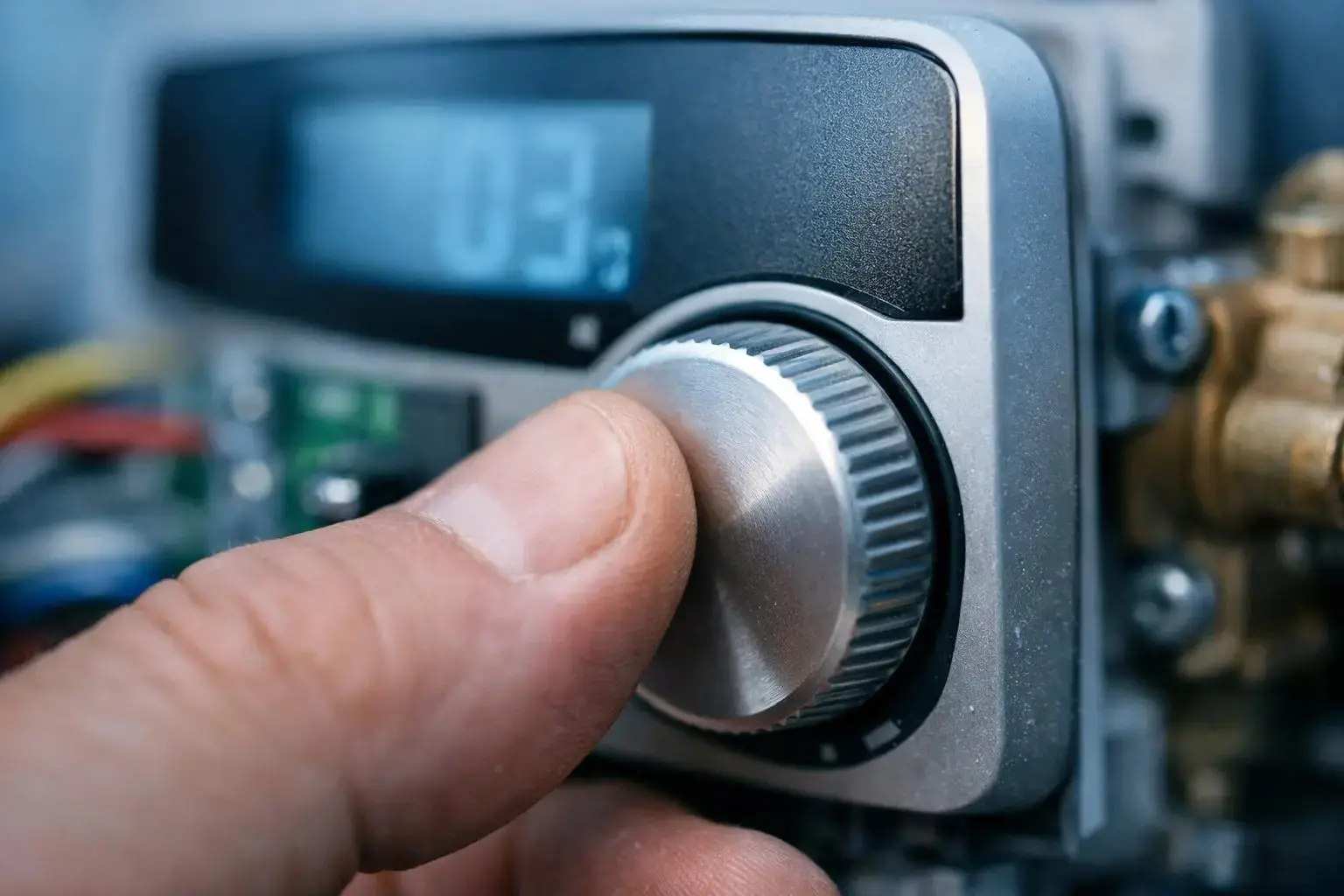
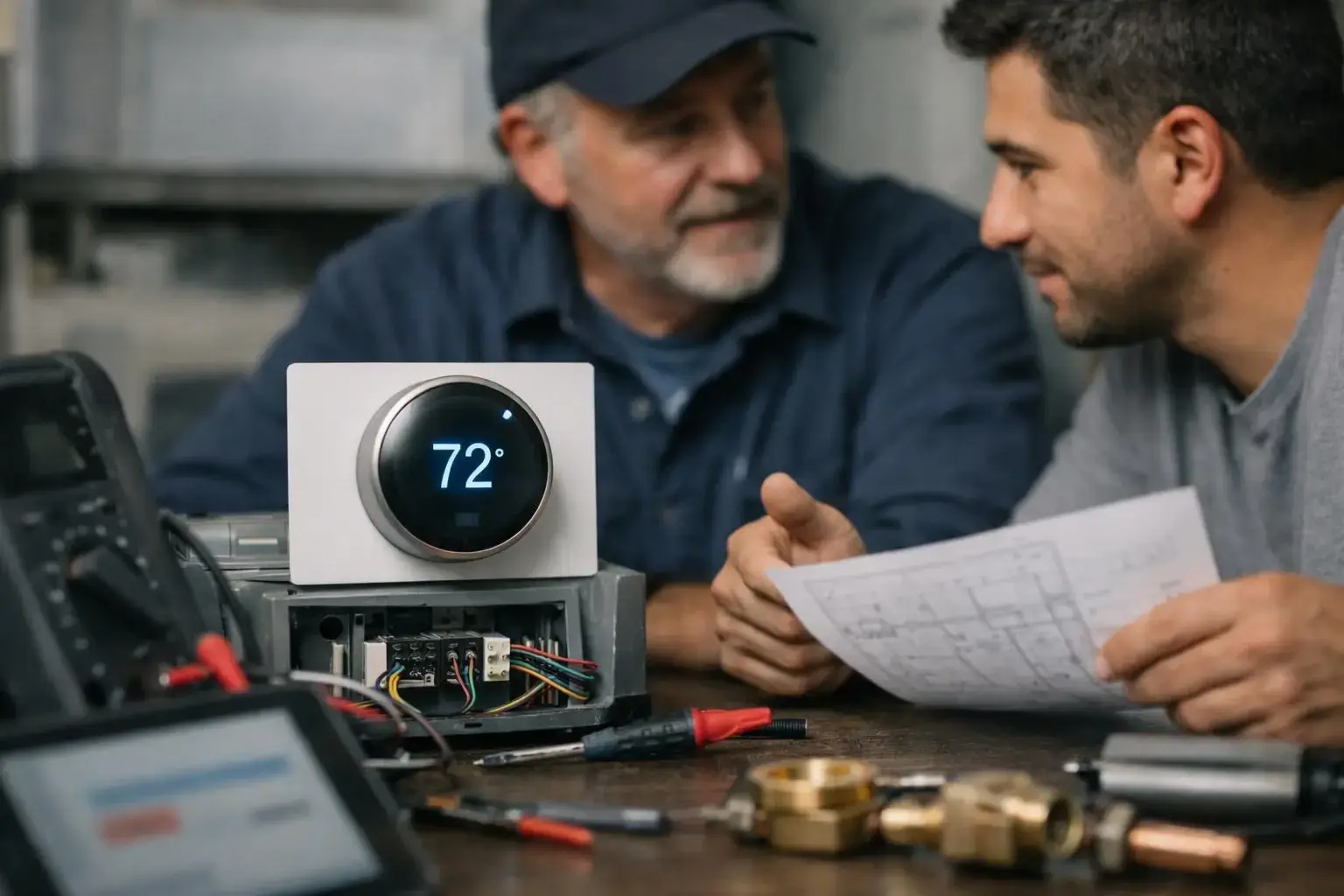
Thermostat is a temperature-sensitive control device that automatically regulates heating and cooling systems to maintain a set indoor temperature. Thermostats detect ambient air temperature and signal HVAC equipment to turn on or off, ensuring consistent comfort and energy efficiency in homes and buildings.
Category
HVAC control device
Used for
Maintaining indoor temperature
Common confusion
Often mistaken for a temperature sensor only
Also called
HVAC controller, temperature regulator
Often discussed with
Smart Thermostat, HVAC Replacement

A thermostat controls your HVAC system. HVAC means heating, cooling. And air flow.
Related glossary terms: Programmable Thermostat, Zoning System, HVAC Load Calculation.
It checks the room's temperature. It compares it to the temperature you set.
If the room is too cold, it tells the heater to turn on. If it's too hot, it tells the AC to start.
This small device keeps your home comfy all year.
Thermostats come in many types. Some are simple and manual.
You change the temperature by hand on these. Others let you set schedules.
You can pick cooler temps at night or when you're away. Smart thermostats learn your habits.
They let you control them from your phone. They can even check the weather.
All thermostats do the same job. They keep your home's climate just right.
A thermostat works with a special part. This part senses temperature changes.
In basic thermostats, a metal strip bends when it gets hot or cold. This opens or closes a circuit.
When the strip gets cold, it turns the heat on. When it gets warm, it turns the heat off.
This cycle keeps the room close to the temperature you want.
Smart thermostats use digital sensors. These sensors measure temperature better.
They send info to a small computer. The computer checks if the room is too hot or cold.
If it is, the thermostat tells the HVAC to start or stop. Smart thermostats also use Wi-Fi.
They learn your schedule. They change settings on their own to save energy.

A good thermostat keeps you comfy. It also saves you money.
Without it, your HVAC would run all the time. It might turn off at wrong times.
This wastes energy. It makes your bills higher.
A well-set thermostat runs your HVAC only when needed. This saves energy and money.
For example, turn it down in winter when you're away. Turn it up in summer.
This can save up to 10% on energy costs. That's what the U.S. Department of Energy says.
Thermostats also help your HVAC last longer. They keep the air clean.
If the HVAC turns on and off too much, it gets stressed. This can break it sooner.
A good thermostat stops this. It keeps the temperature steady.
Smart thermostats also remind you to change filters. This helps your system run well longer.
Thermostats are key in very hot or cold weather. They keep your home safe and comfy.
In Lewisville, TX, summers get very hot. A good thermostat keeps the AC running well.
This stops your home from getting too hot. It also keeps your bills from getting too high.
In cold snaps, it keeps your home warm. It stops pipes from freezing.
Thermostats help when you upgrade your HVAC. If yours is old or hard to use, upgrade it.
A new one can save you money. It can make your home more comfy.
If some rooms are too hot or cold, check the thermostat. If your bills are high, check it too.
Fixing or replacing it might solve the problem. You won't need expensive HVAC repairs.
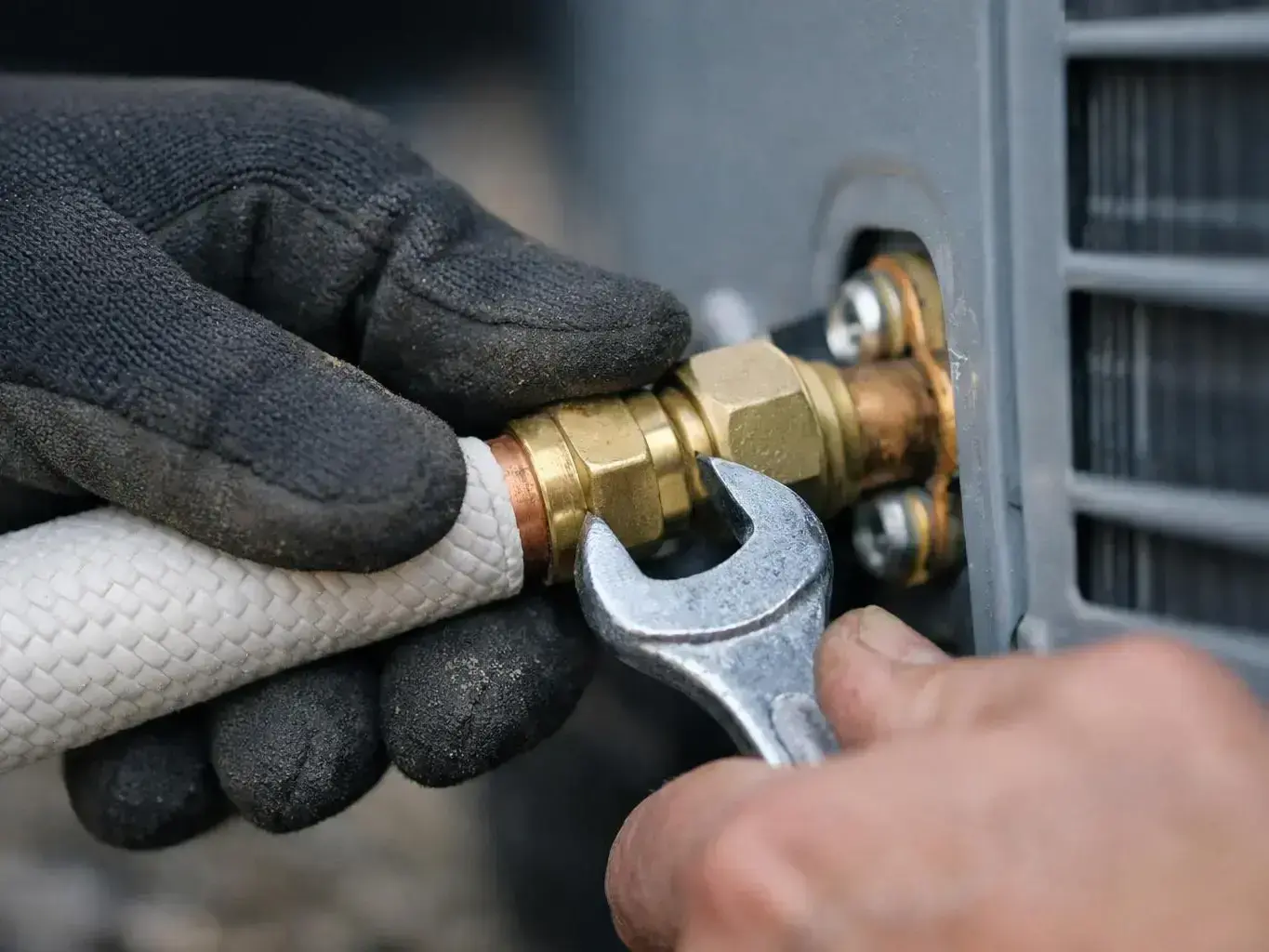
A temperature sensor only measures temperature. While a thermostat both measures and controls the HVAC system to maintain a set temperature.
A zoning system divides a home into multiple temperature zones, each controlled by its own thermostat. While a single thermostat controls the entire home.
A common misconception is that cranking the thermostat way up or down will heat or cool a room faster. Thermostats only control when the system turns on or off, not how quickly it works. Setting extreme temperatures wastes energy and strains the HVAC system.
During a Texas summer, a homeowner sets their smart thermostat to 78°F while they’re at work and 72°F when they return. The thermostat adjusts automatically, keeping the home comfortable while reducing energy use during the hottest hours of the day.
Programmable Thermostat is a digital device that automatically adjusts a home’s heating and cooling settings based on preset schedules. It replaces a manual thermostat, allowing users to set different temperatures for different times of day, reducing energy waste when no one is home or during sleep hours.
Zoning System is a heating and cooling setup that divides a home or building into separate areas. Or zones, each controlled by its own thermostat. Zoning systems use dampers inside the ductwork and multiple thermostats to direct conditioned air only where it's needed, improving comfort and energy efficiency.
HVAC Load Calculation is a detailed process that determines how much heating or cooling a building needs to stay comfortable year-round. It considers factors like room size, insulation, windows, occupants. And local climate to size equipment correctly and avoid energy waste or poor performance.
Indoor Air Quality is the condition of the air inside buildings and structures, especially as it relates to the health and comfort of occupants. Indoor Air Quality measures pollutants such as dust, mold, pollen, carbon monoxide. And volatile organic compounds (VOCs), as well as temperature, humidity. And ventilation levels. Poor Indoor Air Quality can cause headaches, allergies, fatigue. And long-term respiratory issues.
ENERGY STAR is a voluntary U.S. Government-backed program created by the Environmental Protection Agency (EPA) to help consumers and businesses save money and reduce pollution by identifying energy-efficient products and buildings. ENERGY STAR products meet strict efficiency guidelines set by the EPA, often exceeding federal standards without sacrificing performance or features.
ACRepairLewisvilleTX.com
Contact ACRepairLewisvilleTX.com for practical guidance on Thermostat and related hvac contractor work in Lewisville.