Glossary

What is PSI?

PSI is a unit of pressure that stands for 'pounds per square inch.' It measures how much force pushes against one square inch of area. In HVAC systems, PSI shows refrigerant pressure, air duct pressure. Or water pressure in pipes. Correct PSI keeps heating and cooling equipment safe, efficient. And long-lasting.

Sources reviewed: U.S. Environmental Protection Agency - Refrigerant Pressure-Temperature Charts, ASHRAE Handbook - HVAC Systems and Equipment

Quick Facts About PSI

Category

Pressure measurement

Used for

Refrigerant, air ducts, water pipes

Common confusion

Often mixed with PSIA (absolute pressure) or PSIG (gauge pressure)

Also called

Pounds per Square Inch

Often discussed with

AC Maintenance, Heating Repair

Key Takeaways About PSI

Understanding PSI

PSI in HVAC Contractor: PSI is a unit of pressure that stands for 'pounds per square—visual guide

PSI means pounds per square inch. It measures force on one square inch. Press your thumb on a table. The harder you push, the higher the PSI.

Related glossary terms: CFM, Refrigerant, Compressor.

In HVAC systems, PSI shows pressure. It checks refrigerant lines, air ducts. And water pipes. Too much or too little pressure causes problems. It can lead to poor cooling or frozen coils.

It may even break equipment.

How PSI Is Measured and Used?

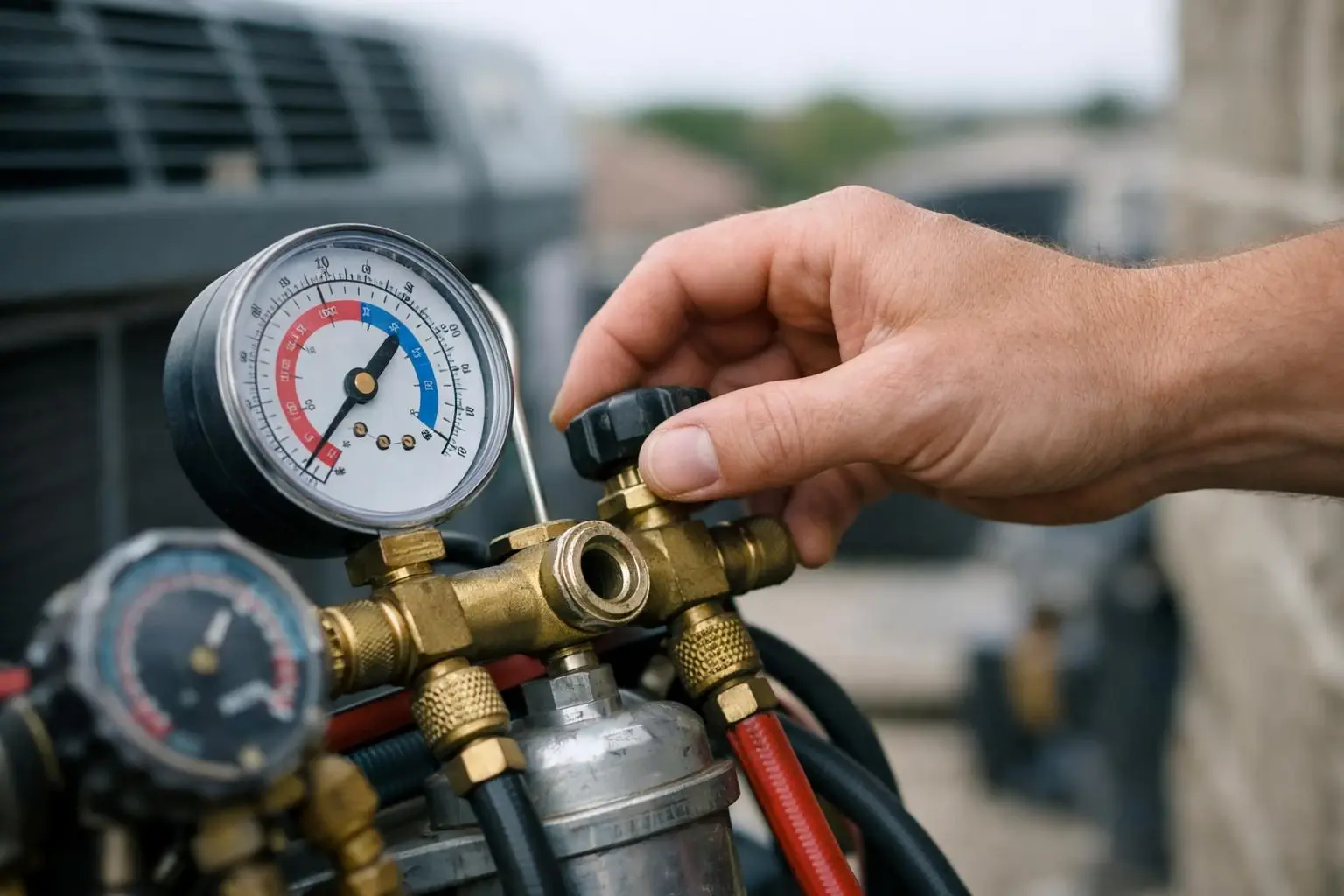
Pressure is invisible. Technicians use gauges to read PSI. These gauges connect to HVAC units. They show the current pressure.

Refrigerant lines in air conditioners have set PSI levels. These levels show if the system works right. If PSI is too low, cooling is poor. If it's too high, parts may break.

The compressor could overheat. Knowing the right PSI keeps systems safe.

%%STRICT_EXTRACTION_ZONE_0%%

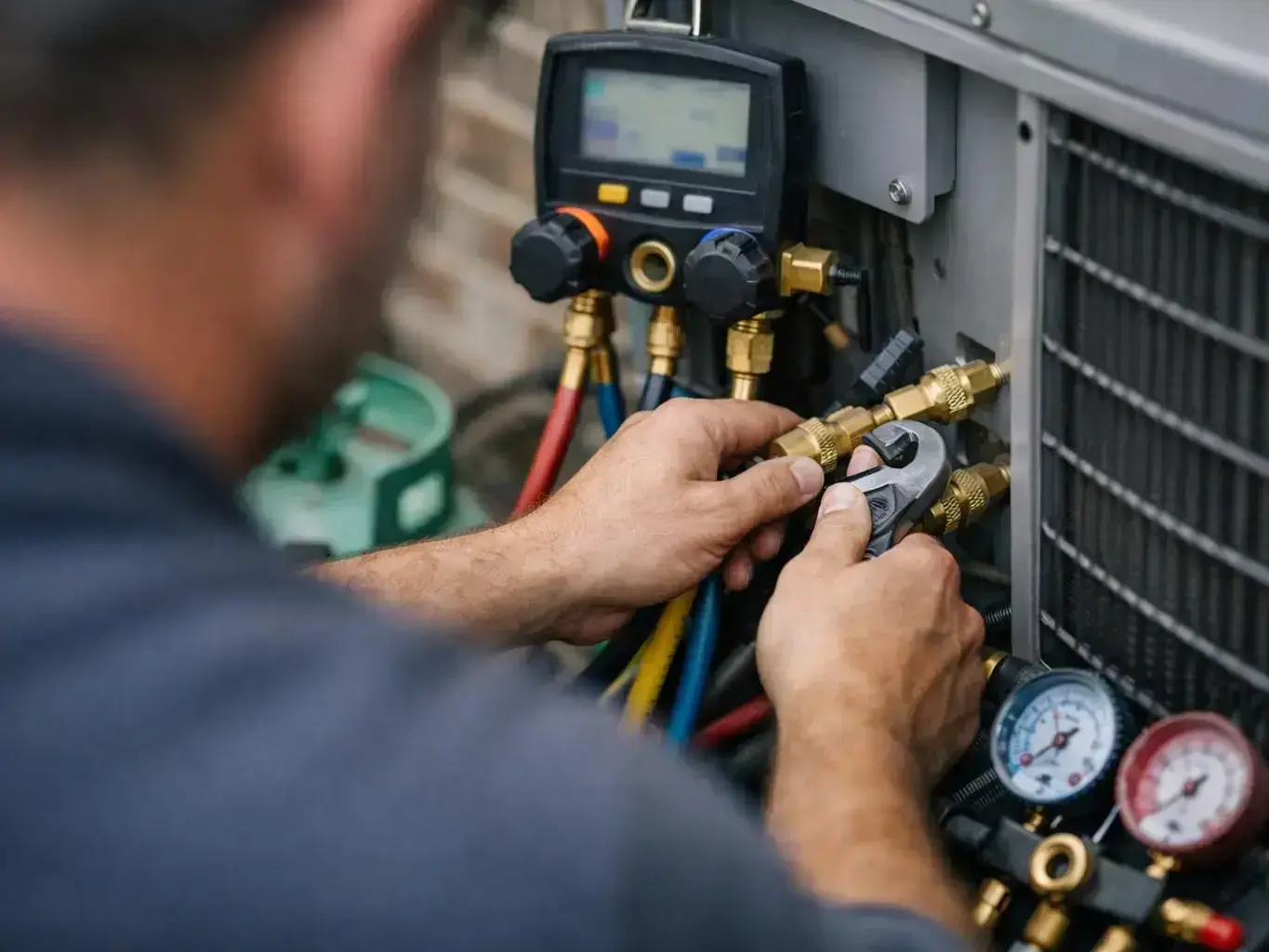
Technicians use manifold gauges. These tools have dials or screens. They connect to HVAC equipment.

This lets them read pressure. Refrigerant lines have low and high sides. Each side has a different PSI range.

A typical air conditioner may show 60-80 PSI on the low side. The high side may show 200-250 PSI. These numbers change with temperature.

Technicians compare readings to charts.

Why PSI Matters?

How PSI applies to HVAC Contractor services in Lewisville, United States—practical illustration

PSI checks airflow in ducts. Too much pressure means blocked ducts. It may also mean a dirty filter. Too little pressure can signal leaks.

Water pipes use PSI too. Boilers need steady pressure. High pressure can burst pipes. Low pressure means poor heating.

Regular PSI checks stop big repairs.

When PSI Matters Most?

PSI affects how well HVAC systems work. The right pressure saves energy. It also prevents waste.

Wrong PSI makes systems run longer. They use more electricity. Parts wear out faster.

Low refrigerant PSI can freeze coils. This blocks airflow. Cooling power drops.

High PSI strains the compressor. It can overheat and break.

%%SEO_CRITICAL_FRAGMENT_4%%

Air duct pressure affects comfort. High PSI makes noise. It can push dust into rooms.

Low PSI means weak airflow. Some rooms get too hot or cold. Water pipe PSI affects heating too.

Boilers need steady pressure. They send hot water evenly. If PSI drops, radiators stay cold.

%%SEO_CRITICAL_FRAGMENT_5%%

PSI matters most during setup, maintenance. And fixes. During setup, technicians set PSI right. This helps systems start well.

During maintenance, PSI checks spot problems. They find leaks, dirty filters. Or bad parts. A slow PSI drop means a leak.

PSI helps fix problems too. Poor cooling may mean low refrigerant PSI. Uneven heating may show duct issues.

In Lewisville, TX, temperatures change a lot. The right PSI helps HVAC systems handle extreme weather.

How to Evaluate PSI?

Related Concepts Compared

PSI vs. PSIG (Pounds per Square Inch Gauge)

PSIG measures pressure relative to the surrounding air. While PSI can refer to either gauge or absolute pressure. Most HVAC gauges show PSIG.

PSI vs. CFM (Cubic Feet per Minute)

CFM measures airflow volume. While PSI measures pressure. Both are important for HVAC performance but track different things.

Expert Note

Small changes in PSI can signal big problems. A drop of just 5-10 PSI in refrigerant lines often means a leak, which can lead to compressor failure if ignored. Always compare readings to the expected range for the outdoor temperature.

Common Mistakes or Myths About PSI

  • Ignoring small PSI changes, thinking they are not important.
  • Using the wrong gauge or not calibrating it, leading to false readings.
  • Confusing PSI with PSIA or PSIG, which measure pressure differently.
  • Assuming all HVAC systems use the same PSI range; each model has its own specs.
  • Forgetting to check outdoor temperature, which affects refrigerant PSI.

PSI in Practice: A Real-World Example

During a summer tune-up in Lewisville, a technician checks an air conditioner’s refrigerant lines. The low-side PSI reads 50. But the chart says it should be 70 at 95°F outside. This low reading suggests a refrigerant leak. The technician finds a small hole in the line, seals it. And recharges the system to the correct PSI. The AC cools better and uses less electricity afterward.

Sources & Further Reading on PSI

Related Services

Related Terms

CFM

CFM is the standard unit used to measure how much air moves through a space each minute. CFM stands for cubic feet per minute, showing the volume of air a fan, vent. Or HVAC system can push or pull. Higher CFM means more airflow, which affects heating, cooling. And indoor air quality in homes and buildings.

Refrigerant

Refrigerant is a chemical substance used in air conditioning, refrigeration. And heat pump systems to absorb heat from indoor air and release it outdoors. Refrigerants circulate through coils, changing from liquid to gas and back, to transfer heat efficiently. Common types include R-410A, R-134a. And R-32, each with specific properties and environmental impacts.

Compressor

Compressor is the mechanical heart of an air-conditioning or heat-pump system. Compressor squeezes low-pressure refrigerant vapor into high-pressure, high-temperature gas so it can release heat outdoors and circulate cooled refrigerant back inside the home. Without compressor, no cooling or heating cycle can occur.

Ductwork

Ductwork is a network of tubes, typically made of sheet metal, fiberglass. Or flexible plastic, installed in homes and buildings to distribute heated or cooled air from HVAC systems. Ductwork carries air from furnaces, air conditioners. Or heat pumps to rooms and returns stale air back to the system for reconditioning, ensuring consistent indoor comfort and air quality.

HVAC Load Calculation

HVAC Load Calculation is a detailed process that determines how much heating or cooling a building needs to stay comfortable year-round. It considers factors like room size, insulation, windows, occupants. And local climate to size equipment correctly and avoid energy waste or poor performance.

ACRepairLewisvilleTX.com

Have Questions About PSI?

Contact ACRepairLewisvilleTX.com for practical guidance on PSI and related hvac contractor work in Lewisville.

(469) 460-3491