Understanding Refrigerant

Refrigerant is a special chemical. It's used in heating and cooling systems (HVAC/R). It moves heat from one place to another.
Related glossary terms: Compressor, Evaporator Coil, Condenser Coil.
It takes heat from inside your home. Then it lets it go outside. This happens by changing from liquid to gas.
It does this at low temperatures. That's why it's key for cooling and heating.
Refrigerants must be safe and steady. They should not catch fire. They also need to move heat well.
But some are better than others. Older ones, like R-22 (Freon), hurt the ozone layer. They also warm the planet.
Newer ones, like R-410A and R-32, are safer. But you still must handle them with care. Leaks or wrong disposal can cause harm.
How Refrigerant Works in HVAC Systems?
The cycle starts when refrigerant goes into the compressor. It's a low-pressure gas then.
The compressor squeezes it. This makes it hot and high-pressure.
Next, it flows to the condenser coil. This coil is usually outside.
There, it lets go of heat. It turns back into a liquid.
The liquid goes through an expansion valve. This makes it cold and low-pressure.
Now it's a mix of liquid and gas. It moves to the evaporator coil inside.
There, it takes in heat from the air. It turns back into a gas.
Fans blow air over the coil. This sends cool air into the room.
The refrigerant keeps doing this. It repeats the cycle to keep the room cool.
How well it works depends on a few things. The type of refrigerant matters. So does the system's design.
Good care is also key. Check for leaks often. Make sure the refrigerant level is right.
Why Refrigerant Matters?
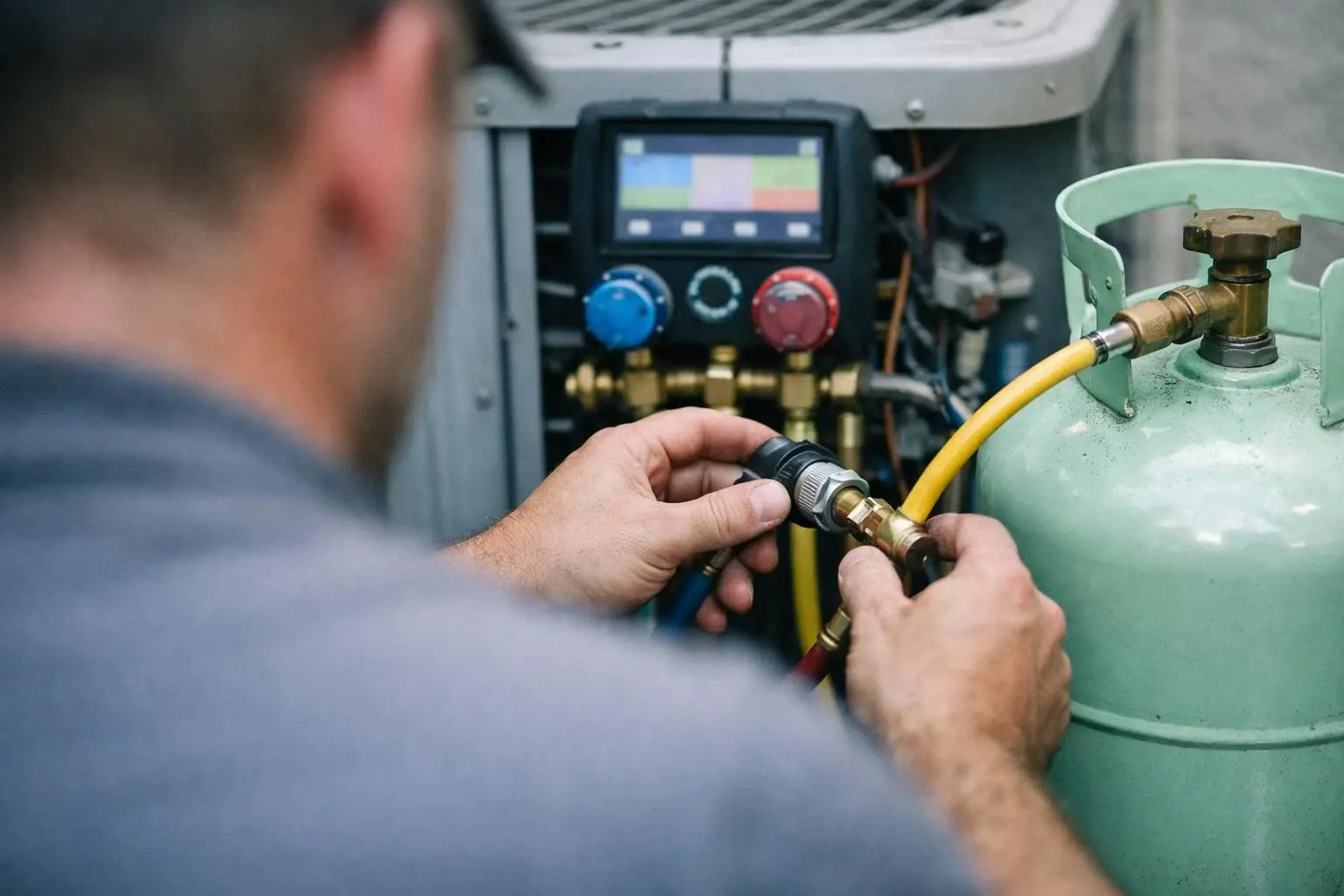
Refrigerant is like the blood of an HVAC system. It affects how well the system works.
It also affects how much energy it uses. And it impacts the environment.
The right amount and type keep things cool. They also save energy.
But if the level is low, the system works too hard. This raises your bills.
It also wears out faster. Some refrigerants are banned now.
Using old or banned types can get you fined.
Safety is also very important. Most refrigerants are safe if used right.
But leaks can cause problems. They may hurt air quality.
Rarely, they can catch fire. Trained pros should handle refrigerant.
They install, fix. And throw it away safely.
Knowing about refrigerant helps homeowners. Look for odd noises or bad cooling.
High bills can also mean a leak. These signs need quick action.
When Refrigerant Matters Most?
Refrigerant matters at key times. One is when you install a new system.
Techs pick the right type. They add the right amount.
Too much or too little causes problems. It can make the system work poorly.
It can also wear parts out fast. Or even break the system.
Check refrigerant levels every year. Look for leaks too.
Older systems need this even more. So do systems that don't cool well.
Refrigerant is also key when upgrading. New systems use safer types.
Old systems may not work with new refrigerant. It may cost too much to change.
Leaks happen often. They're common in old coils or connections.
Listen for hissing sounds. Look for ice on coils.
If the air isn't cool, there may be a leak. Fix leaks fast.
This helps the system work better. It also stops more damage.
Plus, it's better for the planet.