Glossary

What is NATE Certification?

NATE Certification is an independent, industry-recognized credential that proves HVAC technicians have passed rigorous exams testing their knowledge of heating, ventilation, air conditioning. And refrigeration systems. NATE stands for North American Technician Excellence. And certification covers core skills like installation, maintenance. And repair of HVAC equipment.

Sources reviewed: North American Technician Excellence (NATE), U.S. Environmental Protection Agency (EPA)

Quick Facts About NATE Certification

Category

Professional certification

Used for

Proving HVAC technician competence

Common confusion

Not the same as manufacturer training or state licenses

Also called

North American Technician Excellence, NATE Certified

Often discussed with

Heating Installation, AC Installation

Key Takeaways About NATE Certification

Understanding NATE Certification
NATE Certification in HVAC Contractor: NATE Certification is an independent, industry-recognized credential that proves HV...

NATE Certification is a badge HVAC techs earn. They pass tests to get it.

Related glossary terms: HVAC Load Calculation, Refrigerant, Heat Exchanger.

These tests check what they know. They also check what they can do.

The tests don't focus on one brand. They cover rules that work for all systems.

Experts make the tests. They update them often.

NATE stands for North American Technician Excellence. It's run by a group.

This group is not part of any HVAC company. It's not run by any maker.

This keeps the tests fair. They focus on real skills.

Techs with NATE Certification have proven things. They understand HVAC systems.

They know how to put them in right. They know how to find and fix problems.

How NATE Certification Works?

Techs must pass tests to get NATE Certification. They take one or more tests.

The first test covers basics. It asks about electrical systems.

It also asks about safety. And it asks about tools.

After passing, techs can take more tests. These are about special areas.

Areas include air conditioning. They include heat pumps.

They also include gas furnaces. And commercial refrigeration (cooling for stores).

Each test has many questions. They test what techs know.

They also test how techs solve problems.

NATE Certification doesn't last forever. Techs must renew it every two years.

They do this by learning more. Or they take tests again.

This helps techs stay current. They learn about new rules and tools.

It also helps them do better work. And it helps keep them safe.

Tests are taken at special centers. Results come right away.

Techs who pass get a certificate. They can use the NATE logo.

They put it on cards and websites. It helps people see they are good.

Why NATE Certification Matters?
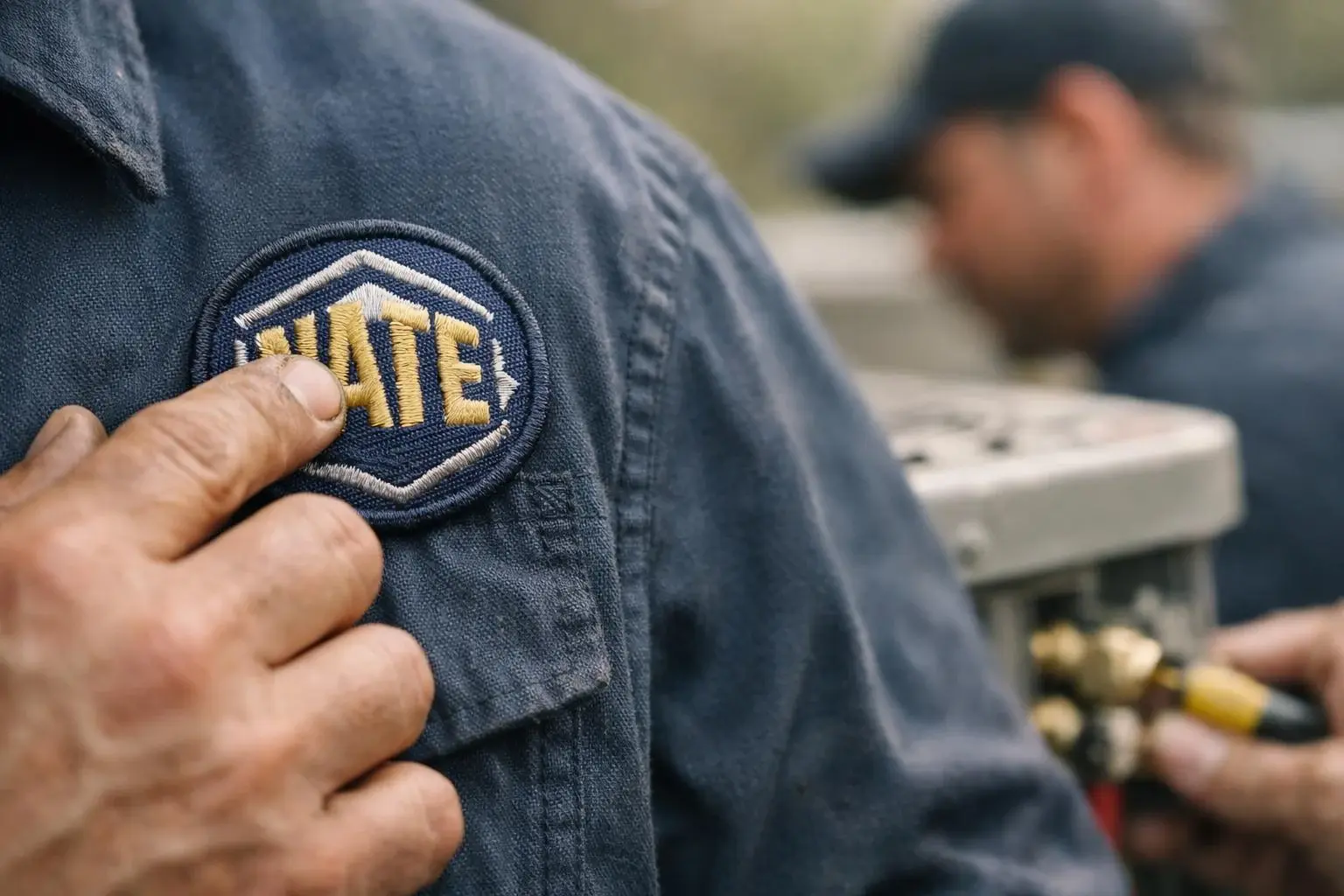
How NATE Certification applies to HVAC Contractor services in Lewisville, United States—practical illustration

NATE Certification matters. It shows techs can do the job right.

HVAC systems are complex. They cost a lot.

Mistakes can cause problems. They can make bills higher.

They can even be unsafe. Certified techs make fewer mistakes.

This saves time and money.

For techs, NATE Certification helps. It can lead to better jobs.

It can also mean more pay. Many bosses want to hire certified techs.

They know these workers have skills. Certification helps techs stand out.

For customers, it means working with the best. These techs meet high standards.

When NATE Certification Matters Most?

NATE Certification helps most in big jobs. These need care, safety. Or skill.

Putting in a new air conditioner costs a lot. A certified tech does it right.

Fixing a gas furnace can be dangerous. A certified tech makes it safe.

Certification matters for warranties (promises from makers). Many need certified techs.

If a tech isn't certified, the maker might say no. They won't cover repairs.

Some programs give money back for upgrades. But only if a certified tech does the work.

In Lewisville, TX, weather gets extreme. HVAC systems must work well.

NATE Certification helps techs do this. They keep systems running right.

They keep them safe. They do this no matter the weather.

How to Evaluate NATE Certification?

Related Concepts Compared

NATE Certification vs. EPA 608 Certification

EPA 608 Certification focuses specifically on handling refrigerants safely. While NATE Certification covers a broader range of HVAC skills.

NATE Certification vs. Manufacturer training

Manufacturer training teaches technicians about specific brands or products. While NATE Certification tests general HVAC knowledge that applies to all systems.

Expert Note

NATE Certification is not just about passing an exam—it’s about proving you can apply knowledge in real-world situations. Many technicians study for months to prepare. And the certification process helps build confidence and competence.

Common Mistakes or Myths About NATE Certification

  • Assuming all certifications are the same—NATE is independent and covers general HVAC skills, not just one brand.
  • Thinking certification is a one-time achievement—technicians must renew it every two years.
  • Believing manufacturer training replaces NATE Certification—it doesn’t cover the same broad knowledge.
  • Ignoring specialty exams—certification is more valuable when it matches the type of work needed.

NATE Certification in Practice: A Real-World Example

A homeowner in Lewisville, TX, needs a new heat pump installed. They hire a NATE-certified technician who has passed exams in both air conditioning and heat pump installation. The technician installs the system correctly, ensuring it runs efficiently and safely. The homeowner avoids costly mistakes and keeps their warranty valid.

Sources & Further Reading on NATE Certification

Related Services

Related Terms

HVAC Load Calculation

HVAC Load Calculation is a detailed process that determines how much heating or cooling a building needs to stay comfortable year-round. It considers factors like room size, insulation, windows, occupants. And local climate to size equipment correctly and avoid energy waste or poor performance.

Refrigerant

Refrigerant is a chemical substance used in air conditioning, refrigeration. And heat pump systems to absorb heat from indoor air and release it outdoors. Refrigerants circulate through coils, changing from liquid to gas and back, to transfer heat efficiently. Common types include R-410A, R-134a. And R-32, each with specific properties and environmental impacts.

Heat Exchanger

Heat Exchanger is a critical component in HVAC systems that transfers heat from one medium to another without mixing them. In furnaces, it moves heat from combustion gases to the air circulated through ducts. In air conditioners, it removes heat from indoor air and releases it outside. Proper operation ensures efficiency, safety. And comfort in heating and cooling systems.

Evaporator Coil

Evaporator Coil is a key component in air conditioning and refrigeration systems that absorbs heat from indoor air. Located inside the air handler or furnace, it contains cold refrigerant that evaporates as warm air passes over it, cooling and dehumidifying the air before circulating it back into the home or building.

Condenser Coil

Condenser Coil is a heat-exchange component in an air conditioning or heat pump system that releases heat absorbed from indoor air to the outdoor environment. Condenser Coils are typically made of copper, aluminum. Or coated steel tubing and are located in the outdoor unit, where a fan blows air across the coil to cool and condense hot refrigerant gas into a liquid.

ACRepairLewisvilleTX.com

Have Questions About NATE Certification?

Contact ACRepairLewisvilleTX.com for practical guidance on NATE Certification and related hvac contractor work in Lewisville.

(469) 460-3491