Understanding Heat Exchanger
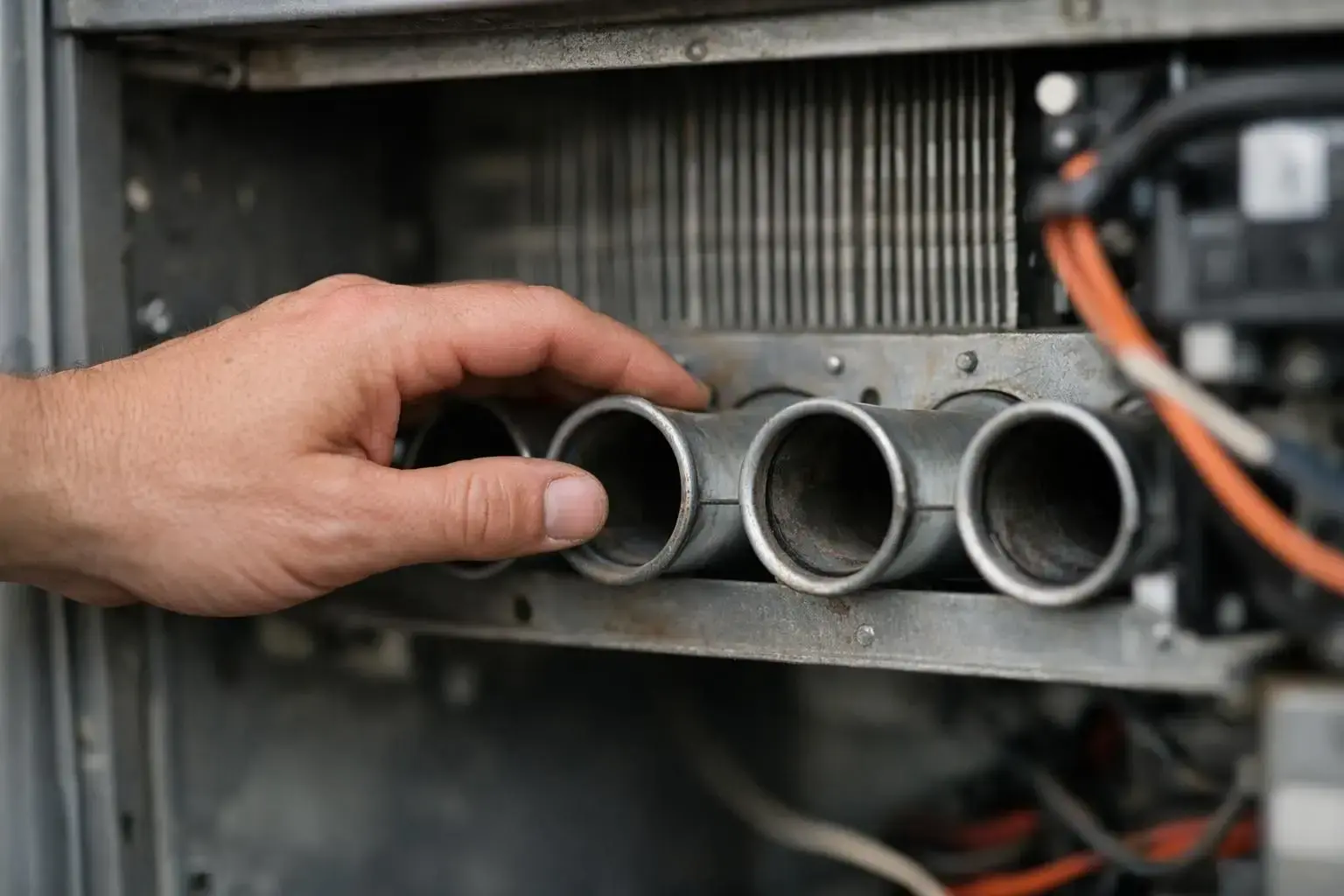
A heat exchanger moves heat between fluids. These fluids can be air, water. Or refrigerant (a cooling liquid). They don’t mix while moving heat.
Related glossary terms: Carbon Monoxide Detector, Evaporator Coil, Condenser Coil.
In HVAC systems, it helps heat or cool your home. In a gas furnace, it takes heat from burning fuel. Then it warms air that blows through your ducts.
In an air conditioner, it removes heat from indoor air. It sends that heat outside. This cools your home. The part is often called a coil.
Heat exchangers come in different shapes and metals. They can be stainless steel, aluminum. Or copper. The metal depends on what it’s used for.
The design moves heat well. It keeps bad gases away from the air you breathe. This keeps you safe.
Bad gases like carbon monoxide can hurt you. They can kill you if they leak inside. Regular care keeps the heat exchanger working right.
How Heat Exchanger Works?
A heat exchanger works by moving heat. Heat always goes from hot to cold. This is a rule of science.
In a furnace, fuel burns to make hot gases. These gases flow through the heat exchanger. The metal walls get hot.
A fan blows air over the hot metal. The air warms up. Then it moves through your home.
The cooler gases leave through a pipe. This pipe is called a flue. It sends gases outside.
In air conditioners, it works the other way. The heat exchanger holds cold refrigerant. Air passes over it and cools down.
The refrigerant takes heat outside. It lets the heat go into the air. This cycle keeps your home cool.
How well it works depends on a few things. The size of the heat exchanger matters. So does the airflow and the refrigerant’s condition.
Why Heat Exchanger Matters?
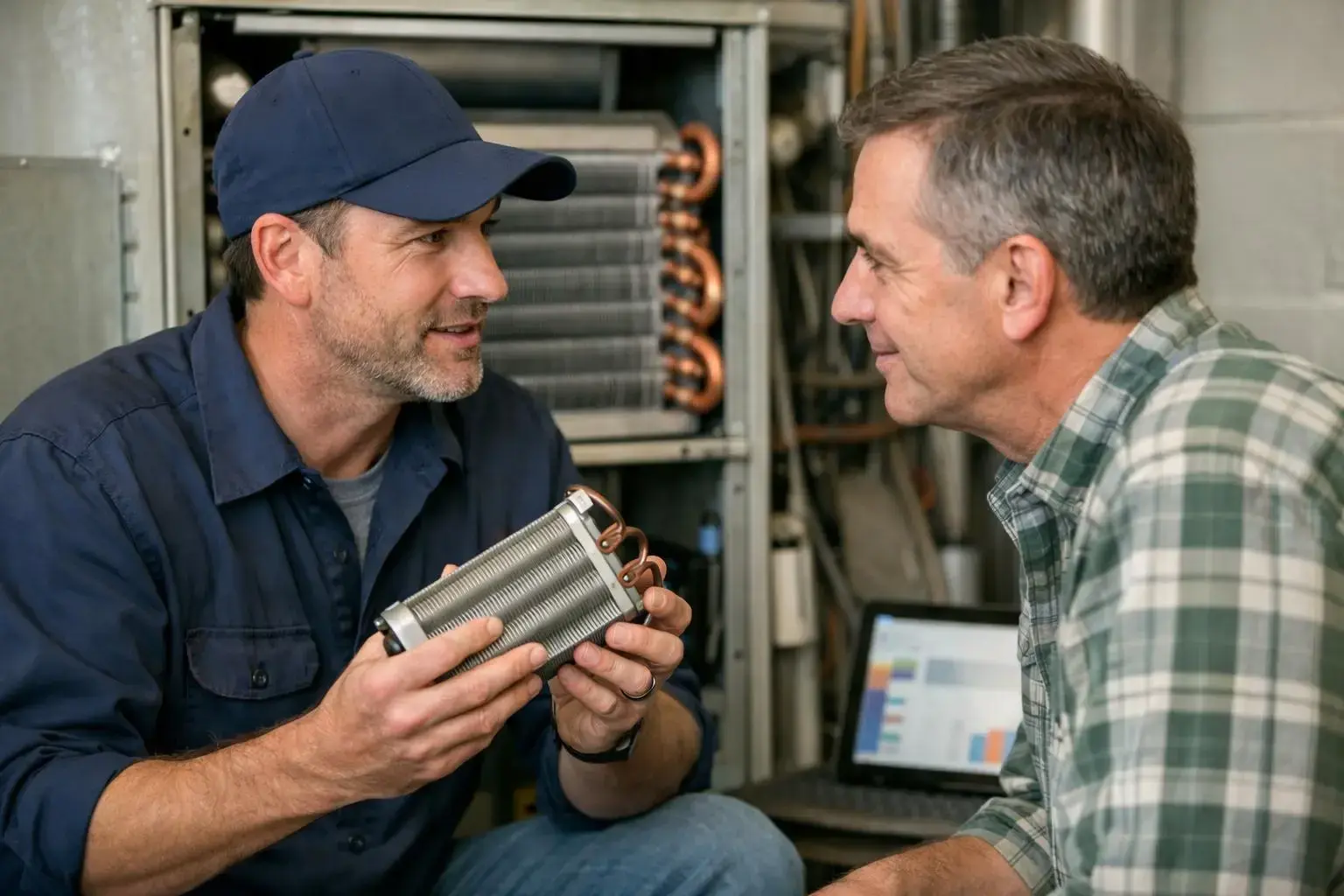
The heat exchanger is key to your HVAC. It affects comfort and safety. A good one keeps your system running well.
It helps lower energy bills. It also cuts wear on other parts. But a bad one causes problems.
A damaged heat exchanger can leak gases. It can raise your bills too. Worst, it may let carbon monoxide inside.
This gas is very dangerous. A crack in the heat exchanger can let it out. That puts your health at risk.
It can also hurt your air quality. Holes let dust and soot into the air. You breathe these things in.
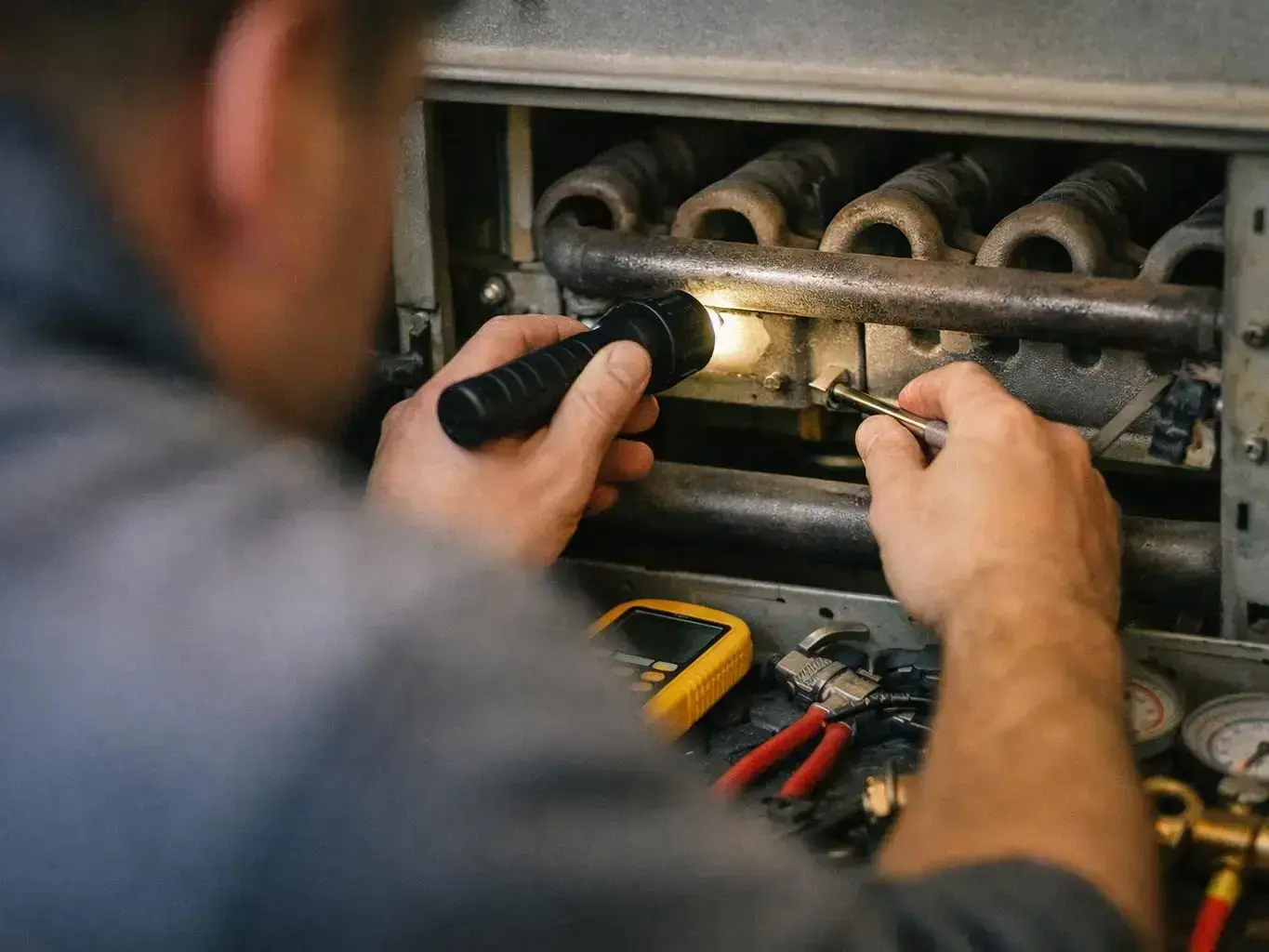
A technician can check for problems. They can find issues early. This stops big repairs or dangers.
Maintenance helps the heat exchanger last. It helps your whole HVAC system too.
When Heat Exchanger Matters Most?
In Lewisville, TX, weather gets extreme. Summers are hot and humid. Winters can be cold.
Your HVAC works hard then. A bad heat exchanger can cause trouble. It may heat unevenly or break down.
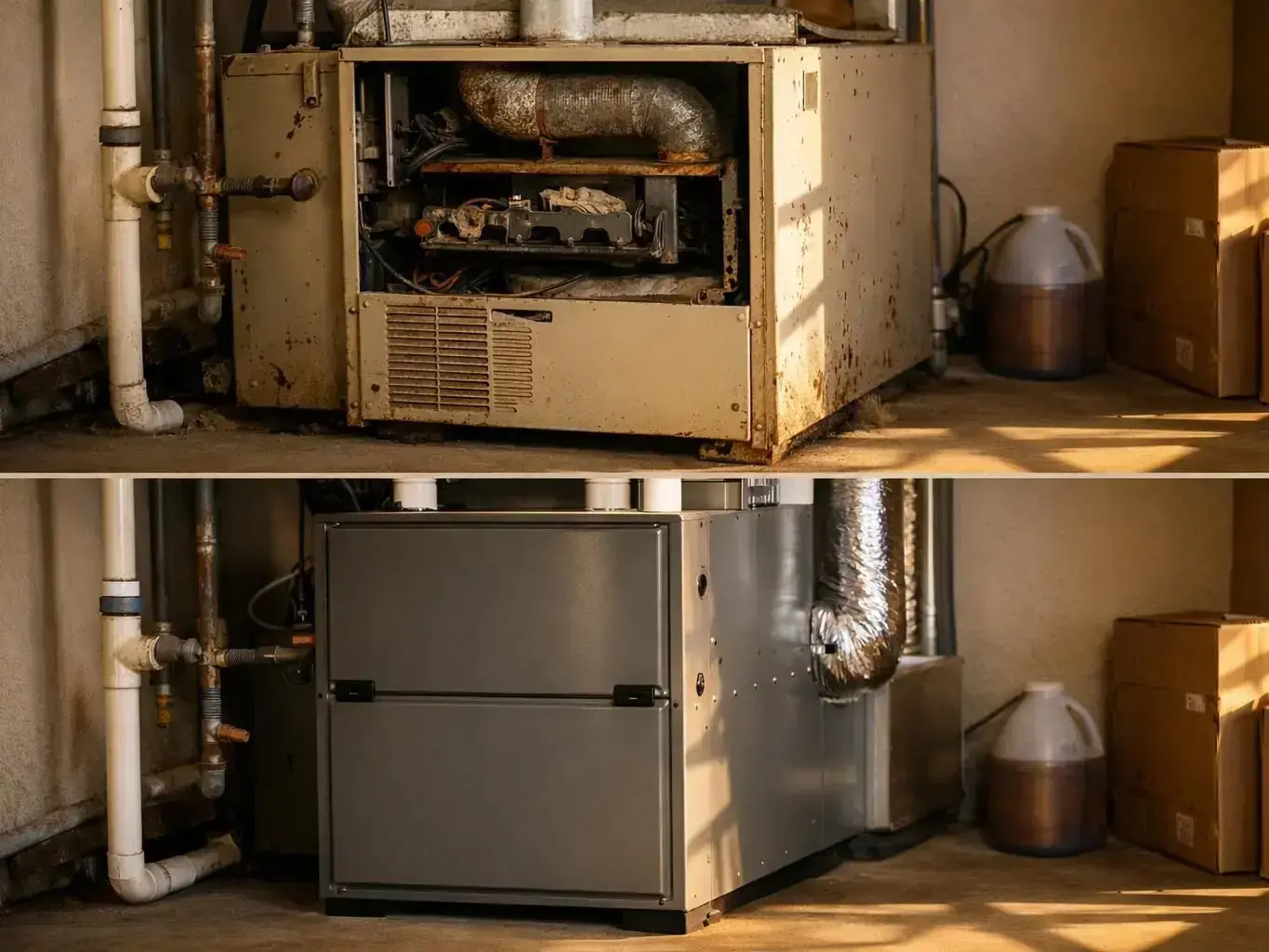
Old furnaces fail more often. So do ones without care. They can leak carbon monoxide.
Watch for warning signs. Strange smells or soot mean trouble. High bills can too.
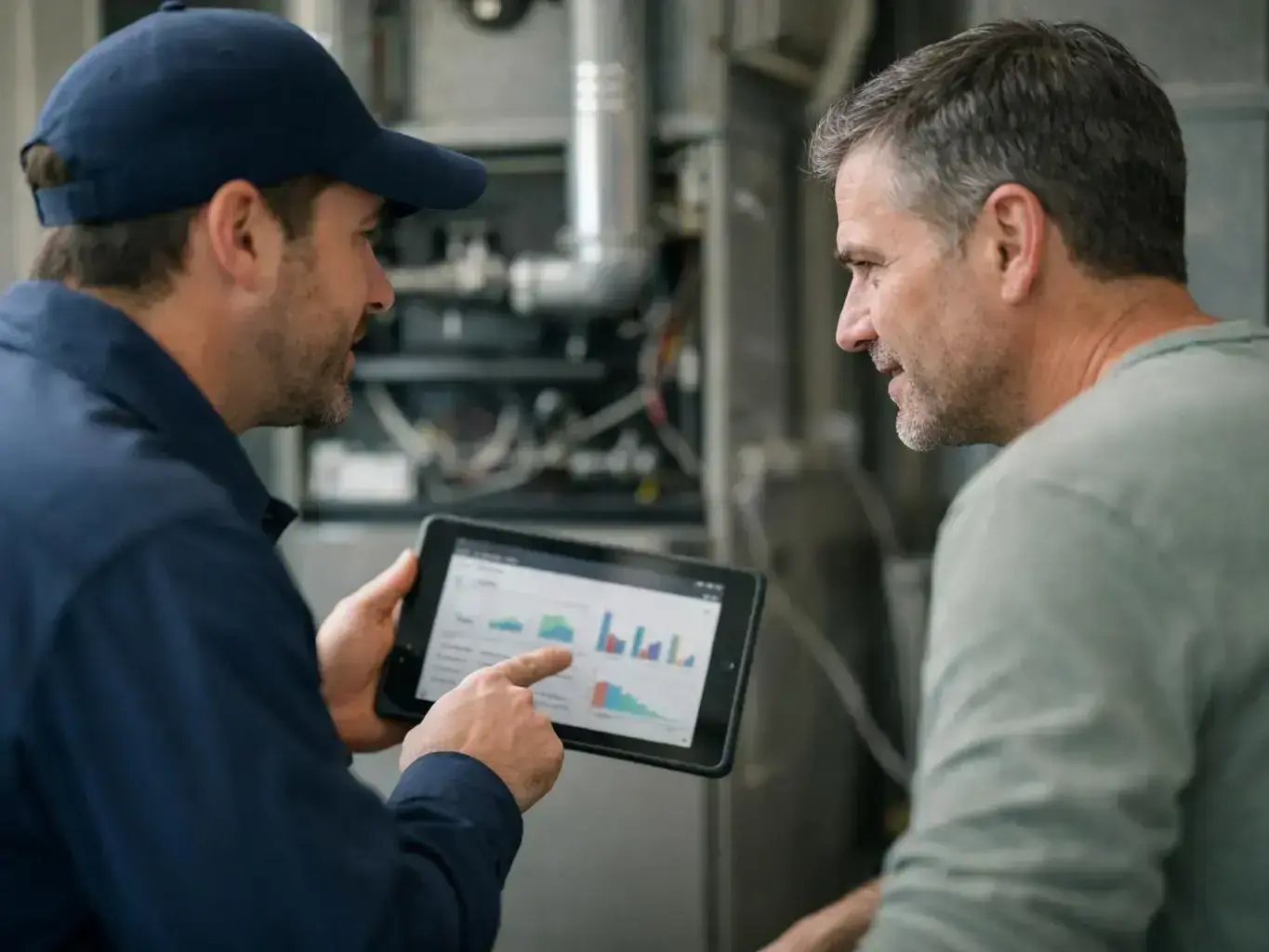
Call a pro if you see these signs. They can check your system. Fast help stops big problems.
Replacing a heat exchanger costs money. But waiting costs more. A broken one can cause lots of damage.
Good care keeps your system safe. It works well all year. That gives you clear next steps.