Glossary

What is Minimum Efficiency Reporting Value?

Minimum Efficiency Reporting Value is a standardized number that shows how well an air conditioner or heat pump filters particles from the air. Higher MERV ratings mean better filtration. But they can also reduce airflow if the HVAC system isn’t designed to handle them. The scale ranges from 1 to 20, with most home systems using ratings between 5 and 12.

Sources reviewed: American Society of Heating, Refrigerating and Air-Conditioning Engineers (ASHRAE), U.S. Environmental Protection Agency (EPA) - Indoor Air Quality

Quick Facts About Minimum Efficiency Reporting Value

Category

HVAC air filtration standard

Used for

Measuring filter effectiveness

Common confusion

Higher MERV always means better for every system

Also called

MERV, MERV rating

Often discussed with

AC Maintenance, Air Duct Cleaning

Key Takeaways About Minimum Efficiency Reporting Value

Understanding Minimum Efficiency Reporting Value
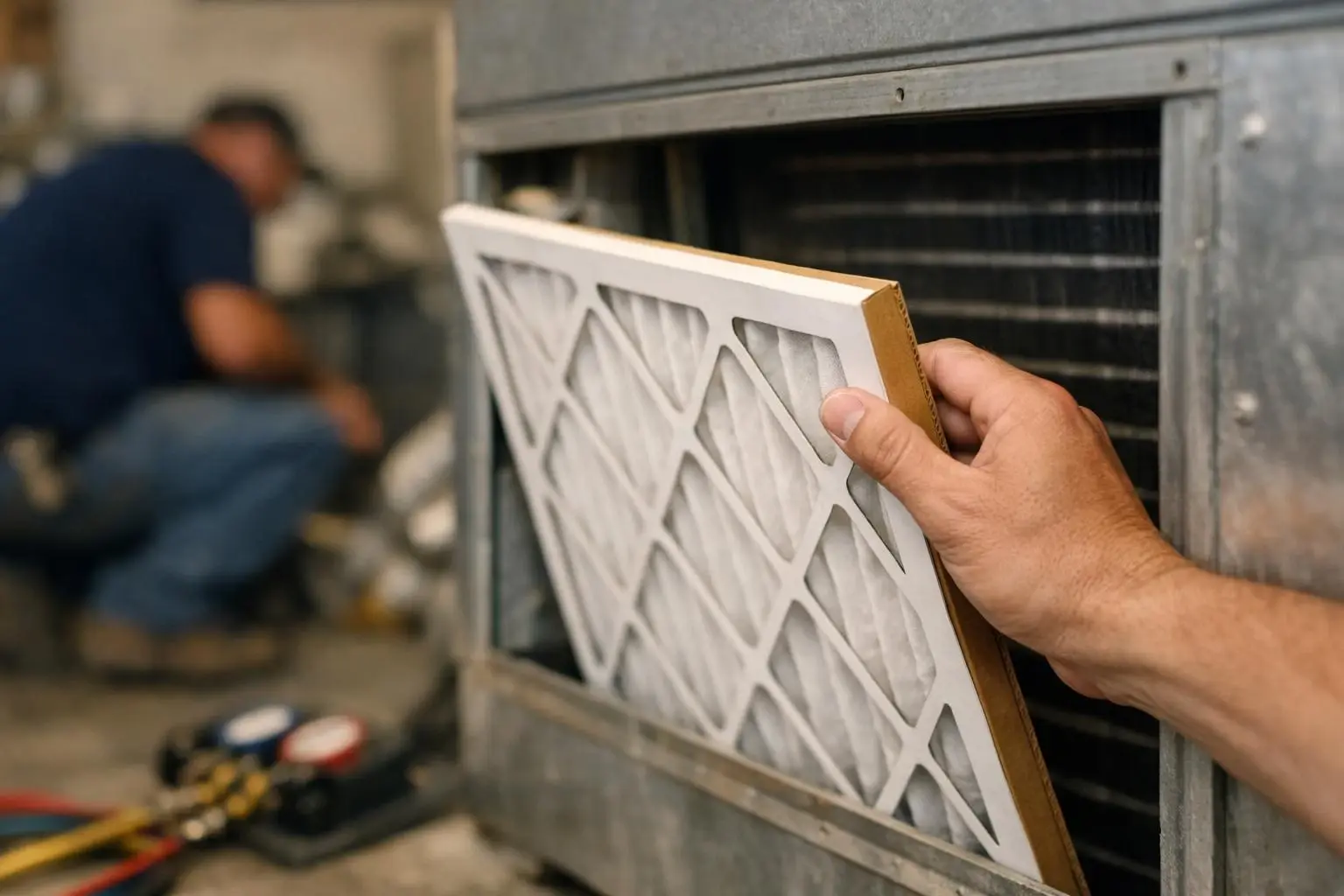
Minimum Efficiency Reporting Value in HVAC Contractor: Minimum Efficiency Reporting Value is a standardized number that sh...

MERV is short for Minimum Efficiency Reporting Value. It is a rating system for air filters. ASHRAE (a group of air experts) made it.

Related glossary terms: MERV Rating, Indoor Air Quality, Air Handler.

MERV shows how well a filter catches dust and pollen. It also catches mold and germs. The scale goes from 1 to 20.

A higher number means better filtering. A MERV 1 filter catches only big stuff. A MERV 16 filter catches much smaller bits.

MERV helps homeowners pick the right filter. It also helps HVAC pros (people who fix heating and cooling). They balance clean air and good airflow.

A very high MERV filter may seem best. But it can hurt your system. This happens if your system isn't made for it.

Thick filters block air. This makes your system work too hard. Over time, this raises bills and can break parts.

Most home systems work best with MERV 5 to 12. That's the sweet spot for most houses.

How Minimum Efficiency Reporting Value Is Measured?

Labs test filters to give them a MERV rating. They check how well filters catch tiny bits. The bits range from 0.3 to 10 microns (very small).

A MERV 8 filter must catch 70% of bits. These bits are 3 to 10 microns. A MERV 13 filter must catch 90% of bits.

These bits are 1 to 10 microns. The test makes sure all MERV 8 filters work the same. It doesn't matter what brand they are.

Filters are tested in the same way. This keeps results fair. The MERV rating is based on these tests.

This rating helps shoppers compare filters fast. You don't need to know tech stuff. But MERV doesn't show everything.

It doesn't tell if a filter removes smells or germs. It only shows how well it catches solid bits.

Why Minimum Efficiency Reporting Value Matters?

How Minimum Efficiency Reporting Value applies to HVAC Contractor services in Lewisville, United States—practical illustra...

MERV ratings matter for two big reasons. They affect air quality in your home. They also affect how well your system runs.

A higher MERV filter catches more dirt. This helps people with allergies or asthma. But too high can cause trouble.

It blocks air and makes your system work harder. This uses more power. It can also break your system faster.

The right MERV saves you money. High MERV filters get full faster. You'll need to change them more often.

Low MERV filters don't catch enough dirt. This can make air bad. It can also clog your ducts with dust.

Knowing MERV helps you pick well. You can balance clean air, good airflow. And cost.

When Minimum Efficiency Reporting Value Matters Most?

MERV ratings help in key times. When you buy a new system, check MERV. When you change your filter, check MERV too.

Some systems can handle high MERV filters. These have strong motors or big ducts. Older or small systems may not.

If someone at home has allergies, MERV matters. Higher MERV filters can help. They catch things that cause sneezes.

In Lewisville, TX, pollen and dust are common. Many people want higher MERV filters. But ask an HVAC pro first.

They can check if your system can handle it. They'll suggest the best filter for you. Don't forget to change filters often.

Even the best filter gets clogged. When it does, it won't work well. Offices, schools. And hospitals need high MERV.

They often use MERV 13 or higher. Their systems are built for this. This keeps air clean and systems running well.

How to Evaluate Minimum Efficiency Reporting Value?

Related Concepts Compared

Minimum Efficiency Reporting Value vs. HEPA filters

HEPA filters are even more efficient than MERV 20 filters, capturing at least 99.97% of particles 0.3 microns or larger. However, they are rarely used in residential HVAC systems because they restrict airflow too much.

Minimum Efficiency Reporting Value vs. Pleated vs. fiberglass filters

Pleated filters usually have higher MERV ratings than fiberglass filters, offering better filtration. Fiberglass filters are cheaper but capture fewer particles.

Expert Note

While higher MERV ratings improve air quality, they aren’t always the best choice. A filter with a MERV rating too high for the system can cause airflow problems, leading to reduced efficiency and potential damage. Always match the filter’s MERV rating to the system’s capabilities.

Common Mistakes or Myths About Minimum Efficiency Reporting Value

  • Assuming a higher MERV rating is always better without checking system compatibility.
  • Using a MERV 13 or higher filter in a residential system not designed for it.
  • Forgetting to change filters regularly, reducing their effectiveness regardless of MERV rating.
  • Ignoring airflow restrictions caused by high-MERV filters, leading to higher energy bills or system damage.

Minimum Efficiency Reporting Value in Practice: A Real-World Example

A family in Lewisville, TX, notices more dust in their home during spring. They consider upgrading from a MERV 8 to a MERV 12 filter to reduce pollen and dust. Before making the change, they consult their HVAC technician, who confirms their system can handle the higher rating without restricting airflow. After the upgrade, they notice cleaner air and fewer allergy symptoms.

Sources & Further Reading on Minimum Efficiency Reporting Value

  • American Society of Heating, Refrigerating and Air-Conditioning Engineers (ASHRAE)
  • U.S. Environmental Protection Agency (EPA) - Indoor Air Quality
  • ENERGY STAR - Air Filters

Related Services

Related Terms

MERV Rating

MERV Rating is a standardized scale from 1 to 20 that measures how effectively an air filter captures dust, pollen, mold spores. And other airborne particles. Higher MERV Ratings indicate finer filtration, meaning the filter traps smaller particles and improves indoor air quality in homes and businesses.

Indoor Air Quality

Indoor Air Quality is the condition of the air inside buildings and structures, especially as it relates to the health and comfort of occupants. Indoor Air Quality measures pollutants such as dust, mold, pollen, carbon monoxide. And volatile organic compounds (VOCs), as well as temperature, humidity. And ventilation levels. Poor Indoor Air Quality can cause headaches, allergies, fatigue. And long-term respiratory issues.

Air Handler

Air Handler is the indoor component of a heating, ventilation. And air conditioning (HVAC) system that circulates conditioned air throughout a building. Air Handlers contain a blower, heating or cooling elements, filter racks. And dampers, working together to regulate temperature, humidity. And air quality in residential and commercial spaces.

HVAC Load Calculation

HVAC Load Calculation is a detailed process that determines how much heating or cooling a building needs to stay comfortable year-round. It considers factors like room size, insulation, windows, occupants. And local climate to size equipment correctly and avoid energy waste or poor performance.

Ductwork

Ductwork is a network of tubes, typically made of sheet metal, fiberglass. Or flexible plastic, installed in homes and buildings to distribute heated or cooled air from HVAC systems. Ductwork carries air from furnaces, air conditioners. Or heat pumps to rooms and returns stale air back to the system for reconditioning, ensuring consistent indoor comfort and air quality.

ACRepairLewisvilleTX.com

Have Questions About Minimum Efficiency Reporting Value?

Contact ACRepairLewisvilleTX.com for practical guidance on Minimum Efficiency Reporting Value and related hvac contractor work in Lewisville.

(469) 460-3491